
 Posted Bypriscilla
Clearing and selling a furnished property at auction transforms what could be months of stressful private sales into a single, date-certain transaction. Within 30 to 45 days, you can move from a house full of furniture, personal effects, and accumulated belongings to a completed sale with funds in hand. The process requires three distinct phases: preparing the property and cataloguing contents, selecting the right auction house and sale format, and executing the clearance while managing legal and practical details.
Key Takeaway: Successfully auctioning a furnished property hinges on three phases: thorough preparation and inventory, choosing an auction format that matches your timeline and goals, and coordinating clearance logistics with legal requirements.
This approach particularly suits estate executors, downsizing families, and property investors who need certainty over maximum price. Rather than juggling individual buyers for furniture, coordinating house clearances, and running separate property sales, auction combines everything into one managed event. You’ll work with professionals who handle viewings, marketing, and buyer vetting while you focus on the emotional work of sorting through belongings and preparing for transition.
The furnished property auction market has evolved considerably, offering far more flexibility than traditional empty-house sales. Modern auction houses now provide hybrid options, from selling contents separately before the property goes under the hammer to offering the entire package as a single lot. Understanding how to auction a house with furnishings requires navigating valuation considerations, buyer expectations, and timing strategies that differ significantly from standard property sales. Done properly, this method brings clarity to an otherwise overwhelming task, turning complexity into a streamlined solution.
What You’ll Need Before You Start

Professional Help You May Need
You’ll likely need a team of professionals to navigate this process smoothly. An auctioneer is essential, they’ll advise on lot structure, marketing, and reserve prices while handling the actual sale. If you’re selling the property itself, an estate agent with auction experience can guide you on whether to sell furnished or separately. A professional valuer becomes crucial when you have antiques, art, or period furniture; their expertise prevents you from underselling valuable pieces or setting unrealistic expectations.
House clearance specialists handle the heavy lifting of removing unsold items, disposing of unwanted contents, and preparing the property for handover, they’re particularly valuable if you’re dealing with a full house and live far away. Think of this process like mudroom organization on a grand scale: you need systems and sometimes extra hands to sort through everything efficiently.
Finally, consider a solicitor or legal advisor, especially if you’re dealing with probate, disputed ownership, or complex property matters. They’ll ensure all documentation is proper and protect you from potential legal complications down the line.
Documentation and Legal Requirements
Before listing anything, gather your essential documents. You’ll need the property deeds or title documents proving ownership, auction houses won’t proceed without these. If you’re handling an estate, probate documents (the grant of probate or letters of administration) are mandatory. Keep certified copies handy, as you’ll need them for both the property sale and any high-value items.
Create a detailed inventory list with photographs of every piece of furniture and significant contents. This protects you legally and helps establish provenance for valuable items. For antiques, collectibles, or items worth over £500, gather any certificates of authenticity, purchase receipts, or previous valuations you can find.
You’ll also need proof of your authority to sell, whether that’s your name on the deeds, executor paperwork, or a power of attorney if acting for someone else. Auction houses scrutinize this carefully to prevent disputes later. If the property has tenants or outstanding mortgages, you’ll need written confirmation these issues are resolved before the auction can proceed.
Missing paperwork stalls the entire process, so start this step early. If documents are lost, begin replacement procedures immediately, these can take weeks.
Important Warnings and Considerations
When Not to Rush the Process
Sometimes, hitting pause is the smartest move you can make. If you’ve just inherited the property or it belonged to a recently deceased loved one, give yourself breathing room. Grief clouds judgment, and decisions made in emotional turmoil often lead to regret over items you’ll wish you’d kept.
Market conditions matter, too. Auction houses can advise whether the current property market favours sellers or if waiting a few months might yield substantially better results. Similarly, if several comparable properties are already listed locally, you may be flooding a saturated market.
Consider waiting if you haven’t explored all your options. Perhaps family members haven’t had sufficient time to claim sentimental pieces, or you haven’t investigated whether specific items might fetch more through specialist sales rather than a general auction. The cost of storage for a few months often pales beside the financial or emotional cost of rushing.
The Complete Step-by-Step Process
Step 1: Assess and Inventory Everything
Start in one room and work methodically through the property, creating a detailed written inventory as you go. Don’t rush this stage, it’s the foundation of your entire auction strategy. Use a simple notebook or spreadsheet with columns for item description, approximate age, condition, and estimated value category (high/medium/low/unsure).
Photograph everything. Take clear shots from multiple angles, capturing maker’s marks, signatures, damage, and distinguishing features. These photos become your reference library when consulting with valuers and auctioneers later, and they document the property’s condition should any disputes arise.
Create four sorting categories as you catalogue: “Auction potential” for items that might have genuine value or broad appeal, “Private sale” for pieces where you know interested buyers, “Donate” for serviceable items with little monetary worth, and “Dispose” for damaged or unsaleable contents. Be conservative at this stage, if you’re uncertain about an item’s value, put it in the auction potential pile. Auctioneers can advise you later.
Pay special attention to smaller items that might slip through unnoticed: hallmarked silver, vintage jewellery, first edition books, quality ceramics, and interesting collectables often hide in drawers and cupboards. Check inside furniture for maker’s labels and stamps, particularly on chair frames and drawer bottoms.
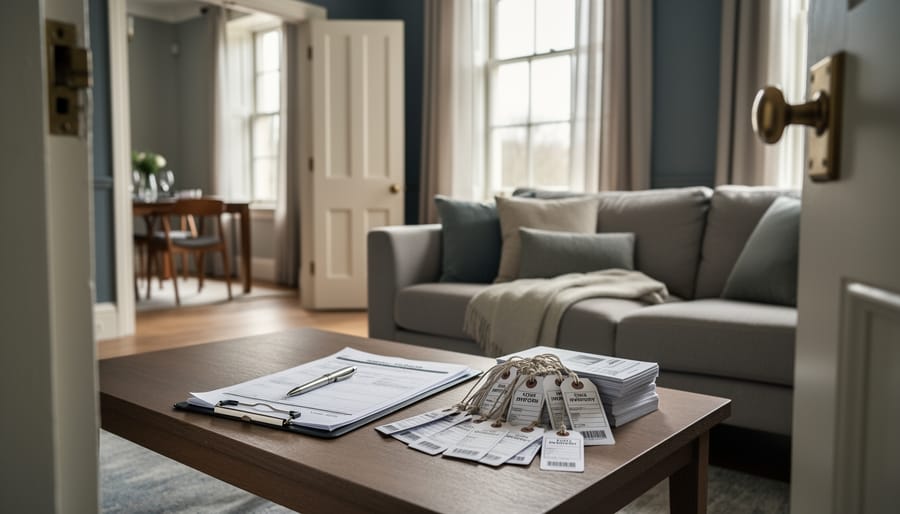
Label each room’s contents clearly using removable tags or coloured stickers corresponding to your four categories. This visual system helps when the auctioneer visits for valuation.
Step 2: Get Professional Valuations
Once you’ve completed your inventory, it’s time to bring in experts who can assign accurate values to your furniture and contents. This step prevents costly mistakes, either underselling genuine treasures or setting unrealistic expectations for ordinary pieces.
For items you believe might have significant value (antiques, designer furniture, artwork, jewellery, or collectibles), contact specialist valuers or auctioneers for professional assessments. Many auction houses offer free valuation days or home visit services, particularly if you’re considering selling through them. Independent valuers typically charge by the hour or per item, but their objective expertise can prove invaluable.
During the valuation, professionals will examine condition, provenance, maker’s marks, and current market demand. They’ll distinguish between sentimental value and actual market value, a sometimes difficult but necessary reality check. Ask valuers to provide estimates in writing, noting both auction expectations and insurance replacement values, which often differ considerably.
Use these professional assessments to set sensible reserve prices that protect you from giveaway sales whilst remaining attractive to bidders. Reserves pitched too high result in unsold lots and wasted fees, whilst realistic reserves generate competitive bidding and successful outcomes.
Step 3: Choose Your Auction Strategy
Once you’ve inventoried and valued everything, you face a strategic fork: should you sell the property furnished as a single lot, separate the contents from the property, or use a dedicated house contents auction?
Selling the property furnished works brilliantly when the furnishings genuinely enhance the property’s appeal, think period furniture complementing a characterful cottage, or quality contemporary pieces that showcase a modern apartment’s potential. Buyers get a move-in-ready package, and you avoid the hassle of multiple sales. The trade-off? You’ll likely receive less than selling items individually, and some buyers may actually discount their offer if they don’t want the furniture.
Separating furniture from property gives you maximum flexibility and potentially higher returns. You control the timeline for each sale and can target different buyers, property investors for the house, collectors for valuable pieces. However, this means coordinating two distinct processes, managing interim storage if the property sells first, and investing more time overall.
Specialist house contents auctions suit properties packed with antiques, collectibles, or quality furniture but where the property itself needs work. These auctioneers understand item values and attract the right buyers. The downside is commission fees on individual lots and the logistical challenge of clearing everything before the property sale completes.
Your choice hinges on three factors: the quality and value of contents, your timeline, and whether the furniture genuinely adds or detracts from the property’s marketability.
Step 4: Select the Right Auction House
Choosing the right auction house can significantly impact your final sale price and experience. Start by researching local and regional auctioneers who specialize in property or house contents, check their websites for past results and testimonials. Look for houses with strong online presence and active bidding platforms, as this extends your reach beyond local buyers.
Commission structures vary widely, typically ranging from 10% to 25% of the hammer price, often with additional fees for photography, cataloguing, or lot withdrawal. Ask for a complete breakdown in writing. Don’t automatically choose the lowest rate; a well-connected auctioneer with better marketing may deliver higher bids that more than offset their fees.
Request details about their viewing arrangements. Will they hold multiple viewings? Do they accommodate private appointments? More viewing opportunities generally mean more interested bidders.
Essential questions to ask: How many catalogues do they distribute? What’s their email database size? Do they advertise in specialist publications? How long is their typical sales cycle? Can they provide references from recent vendors in similar situations? A reputable auctioneer will answer confidently and provide evidence of their track record without hesitation.
Step 5: Prepare the Property and Contents
Start with a thorough clean, dust, vacuum, and air out rooms to remove mustiness. Tackle minor repairs like loose handles, squeaky hinges, or scuffed paintwork; these small fixes signal care without major expense. For staging, resist the urge towards luxurious staging unless the property warrants it. Instead, declutter ruthlessly and arrange furniture to show room flow and purpose. A minimalist look often works best, letting buyers focus on pieces rather than clutter. If rooms feel bare, consider simple layering ideas like fresh flowers or throws. Open curtains for natural light, but leave the property’s character intact. Buyers at auction expect authenticity, not perfection, aim for clean and honest presentation that highlights what’s genuinely appealing about the furniture and space.
Step 6: Navigate the Auction Process
Once your property is listed, expect a 4-6 week lead time before auction day. The auctioneer will advertise the sale through their catalogue, website, and mailing list, whilst arranging viewing days, typically two or three sessions where prospective buyers inspect the property and contents.
During viewings, you’ll need someone present (often the auctioneer’s staff) to answer questions and ensure security. Buyers will scrutinize everything from structural condition to individual furniture pieces, so anticipate detailed enquiries. Your auctioneer handles most questions, but be prepared to clarify provenance or provide additional documentation for valuable items.
Setting your reserve price, the minimum you’ll accept, requires balancing market reality with your expectations. Your auctioneer will advise based on viewing interest and comparable sales, but the final decision is yours. Set it too high and risk no sale; too low and you might undersell.
On auction day itself, bidding typically lasts just minutes. You can attend or monitor remotely. If the hammer falls above your reserve, you’ve got a legally binding sale. Below reserve, you can negotiate with the highest bidder afterward or withdraw the lot entirely.
Verifying Success and Next Steps

Post-Auction Responsibilities
Once the auctioneer’s hammer falls, your responsibilities shift from preparation to execution. Most auction houses require payment within 5-10 working days, though timelines vary, confirm this upfront. Buyers typically need to collect their purchases within 7-14 days of payment clearing. You’ll need to coordinate access times, provide safe loading areas, and sometimes arrange additional help for heavy furniture pieces.
Unsold lots present a decision point. You can re-enter them in a subsequent auction (often at reduced reserves), accept post-auction offers if the auctioneer fields any, or arrange private disposal. Many auction houses offer post-sale clearance services for a fee, which can be worthwhile if you’re working to a tight property completion deadline.
Keep meticulous records of all transactions. Chase outstanding payments through the auction house rather than directly approaching buyers, they’ll handle enforcement of payment terms. If selling the property furnished as a single lot, completion usually follows standard conveyancing timelines of 4-8 weeks, but verify this with your solicitor as furnished sales can involve additional contract clauses.
Stay accessible during this period. Quick responses to collection queries and flexibility with viewing times help ensure smooth handovers and maintain goodwill.
Final Property Handover
Once the auction concludes and buyers collect their purchases, your final responsibility is ensuring the property stands ready for handover. Walk through each room methodically, checking that all sold items have been removed and nothing remains that shouldn’t. Buyers sometimes overlook smaller pieces or fixtures they’ve purchased, so a thorough inspection prevents confusion later.
Document the property’s condition with photographs, particularly important if you’re also selling the building itself. These images provide evidence of how you left the space and protect against any disputes. Remove any remaining personal belongings, clear out cupboards and lofts, and arrange professional cleaning if the sale contract requires it.
If you’re selling the property alongside its contents, coordinate closely with your solicitor regarding completion dates. The property should present as agreed in the sale particulars, a timeless presentation that matches what viewers saw. Arrange final meter readings, cancel or transfer utilities, and hand over all keys and alarm codes to the new owner or their representative, completing your clearance journey.

Common Questions About Clearing Furnished Properties for Auction
People about to clear and sell a furnished property through auction tend to have remarkably similar concerns. These questions come up time and again, and the answers help clarify what you can realistically expect from the process.
How long does the entire process typically take?
From initial assessment to auction completion usually takes 6-12 weeks, though this varies considerably depending on valuations, auction house schedules, and whether you’re selling property and contents together. Estate sales with probate requirements often need longer.
What auction fees should I budget for?
Auction houses typically charge sellers 10-20% commission plus VAT, with additional fees for photography, cataloguing, and insurance. Total costs usually run 15-25% of the hammer price, so factor this into your reserve prices from the start.
Should I clear out personal items before the auction house visits?
Yes, remove all personal documents, photographs, and sentimental items first. Auction professionals need to see what you’re actually selling, but they don’t need to wade through private paperwork or family keepsakes while doing valuations.
What happens to furniture and items that don’t sell on the day?
Unsold lots can be re-entered in future auctions (sometimes at reduced reserves), sold privately through the auction house, or returned to you. Discuss your preferences with the auctioneer beforehand, as storage fees may apply for items left after collection deadlines.
The timing question deserves a bit more context. If you’re working to a strict deadline, communicate this upfront with auction houses. Some run sales every few weeks and can accommodate tighter schedules, while others specialize in quarterly prestigious sales that offer better exposure but require more patience. The right choice depends on whether speed or maximizing value matters more to you.
Regarding what sells well, quality always finds buyers. Mid-century furniture, antique pieces with provenance, complete dining sets, and well-maintained sofas typically perform strongly. Generic modern flat-pack furniture struggles unless priced very low, which is why some people choose to donate these pieces rather than pay auction fees that exceed their likely hammer price. Honest conversations with valuers about what’s worth including save you money and disappointment.
Clearing and selling a furnished property at auction isn’t something you tackle on a whim, but with the right preparation, it can be surprisingly straightforward. Yes, there’s paperwork to organize, decisions to make about what stays and what goes, and professionals to coordinate. But you’ve also got a clear framework to follow, one that thousands of people have successfully navigated before you.
Start by reaching out to a reputable auctioneer for an initial consultation. Their experience will save you from costly missteps and help you see possibilities you might have missed. Then take it step by step, giving yourself permission to move at a pace that feels manageable rather than overwhelming.
Remember, there’s no perfect way to do this, only the approach that works best for your circumstances, timeline, and peace of mind. Whether you’re dealing with a beloved family home or an inherited property you’ve never lived in, you’re making thoughtful decisions during what can be an emotionally charged time.
Have you cleared a furnished property for auction, or are you currently in the thick of it? Share your experiences, tips, or questions in the comments below. This community thrives on real stories and practical wisdom.