
 Posted Bypriscilla
Modern home decor in 2026 centers on blending minimalist forms with warm, livable textures, integrating sustainable materials, and incorporating smart technology that disappears into the design rather than dominating it. The evolution from stark, cold modernism to what designers now call “warm minimalism” reflects a shift in how we want to feel in our spaces after years of prioritizing function over comfort. Clean lines and uncluttered surfaces remain, but they’re now softened with organic materials, earthy color palettes, and pieces that invite touch and use.
The contemporary home celebrates negative space without feeling empty. Sculptural lighting fixtures serve as art. Natural wood grains contrast with matte metals. Vintage or handcrafted elements mix with sleek contemporary pieces, creating spaces that feel collected rather than catalog-ordered. This approach works whether you’re refreshing a single room or reimagining your entire home, and the ideas ahead span different budgets and commitment levels.
What makes an idea truly modern isn’t just its visual style but its alignment with how we actually live. Flexible furniture arrangements accommodate remote work. Biophilic design elements improve air quality and mood. Durable, timeless pieces replace disposable trend purchases. The following fifteen ideas offer specific, actionable ways to bring this contemporary sensibility into your living spaces, from small accent updates to more substantial room transformations. Each suggestion balances aesthetic impact with practical function, giving you concrete starting points for creating a home that feels both current and genuinely yours.
What Makes Home Decor Truly Modern in 2026
Modern home decor in 2026 isn’t defined by a single aesthetic but by a set of guiding principles that prioritize both immediate impact and lasting value. The ideas in this list were selected based on how well they embody today’s design philosophy while remaining adaptable to individual spaces and budgets.
Each concept featured here meets specific criteria that reflect what the industry, and homeowners, now value most:
- Functionality-first design that solves real living challenges, not just decorative appeal
- Sustainable materials and conscious sourcing that reduce environmental impact
- Neutral palettes with strategic bold accents for visual interest without overwhelm
- Clean lines and uncluttered surfaces that create breathing room
- Versatile styling that adapts across different rooms and home sizes
- Accessible price points with options ranging from budget-friendly to investment pieces
This framework bridges contemporary innovation with timeless appeal. Modern decor today rejects the coldness sometimes associated with minimalism, instead embracing warmth through natural textures, organic shapes, and intentional personal touches. It’s less about following rigid rules and more about making deliberate choices that enhance daily life.
Industry events this year reinforce these shifts. Maison & Objet in Paris (January 15-19, 2026) showcased designers prioritizing materials with stories, reclaimed woods, artisan ceramics, hand-finished metals, over mass-produced uniformity. Meanwhile, the Home Decor Show coming in June 2026 will feature India’s loved brands and premium collections, highlighting how modern design now draws from global influences while respecting regional craftsmanship.
The global home decor market, valued at $862.18 billion in 2026 and projected to reach $1,299.88 billion by 2034, reflects growing consumer investment in thoughtful interiors. People want spaces that work harder, look better longer, and align with their values. The fifteen ideas that follow deliver exactly that, practical transformations grounded in current design thinking, not fleeting trends that disappear by next year.
15 Modern Home Decor Ideas to Elevate Your Space
1. Sculptural Lighting as Statement Pieces
Sculptural lighting fixtures transform ordinary rooms into gallery-worthy spaces by serving as both illumination and three-dimensional art. These architectural pieces, think oversized pendant globes, asymmetrical chandeliers, or angular floor lamps, command attention the moment someone enters a room. Brushed brass brings warmth and subtle luxury, while blackened steel or matte black metal creates dramatic contrast against light walls. Organic shapes inspired by nature, such as branching forms or fluid curves, soften the clean lines typical of modern interiors and introduce visual interest at eye level or above.
When selecting sculptural lighting, consider scale carefully. A piece that works in a showroom might overwhelm a home dining area or feel lost in a double-height foyer. Install statement fixtures where they’ll be appreciated from multiple angles, over a dining table, in an entryway, or flanking a sofa, and keep surrounding decor minimal to let the lighting shine as the focal point it’s designed to be.
2. Layered Neutral Textures
Monochromatic palettes risk feeling sterile without textural variety. The key is pairing materials with contrasting tactile qualities while maintaining a cohesive color story. Start with a foundational neutral, warm taupe, greige, or soft white, then introduce visual interest through surface diversity rather than color shifts.
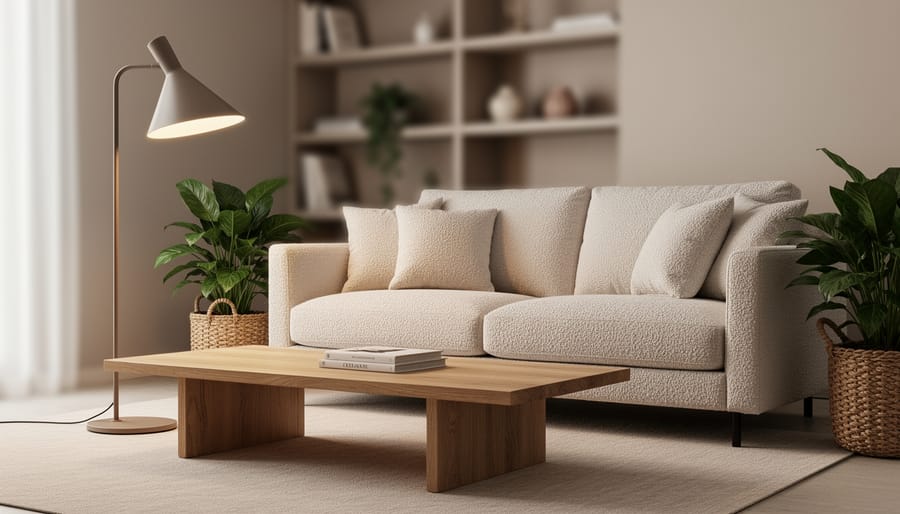
A bouclé sofa anchors the space with nubby, dimensional fabric. Layer linen throw pillows alongside smooth leather cushions. Add a chunky wool throw draped casually over one arm. This interplay of soft, looped, and supple textures creates depth that monochrome alone cannot achieve.
Ground the arrangement with natural materials. A raw-edge wood coffee table introduces organic grain patterns. Stack stone coasters or a travertine tray on its surface. Jute or sisal area rugs provide rough contrast beneath polished surfaces. Understanding how to layer these elements prevents your neutral scheme from reading as unfinished or bland.
Wall treatments add another textural dimension. Consider grasscloth wallpaper, limewash paint with visible brushstrokes, or exposed plaster finishes. Each catches light differently throughout the day, animating neutral surfaces that would otherwise recede. The result feels intentionally curated rather than simply beige.
3. Sustainable Natural Materials
Sustainable materials transform modern spaces while respecting the planet. Reclaimed wood brings warmth and character through exposed beams, accent walls, or statement furniture pieces that tell a story in every grain and imperfection. Each salvaged plank carries history while reducing demand for virgin timber.
Bamboo offers rapid renewability for flooring, cabinetry, and decorative screens. This grass regenerates in three to five years compared to decades for hardwoods, making it exceptionally eco-friendly without sacrificing durability or sophisticated appearance.
Cork provides sound-dampening qualities and visual interest for walls, flooring, or bulletin boards. Harvested from bark without harming trees, cork regenerates naturally and adds organic texture to modern interiors.
Recycled metals appear in lighting fixtures, hardware, and furniture frames. These repurposed materials reduce mining impacts while delivering the sleek finishes modern design demands. As the home decor market grows toward $1299.88 billion by 2034, consumer preferences increasingly favor environmentally responsible choices that don’t compromise aesthetic quality.
4. Multi-Functional Furniture
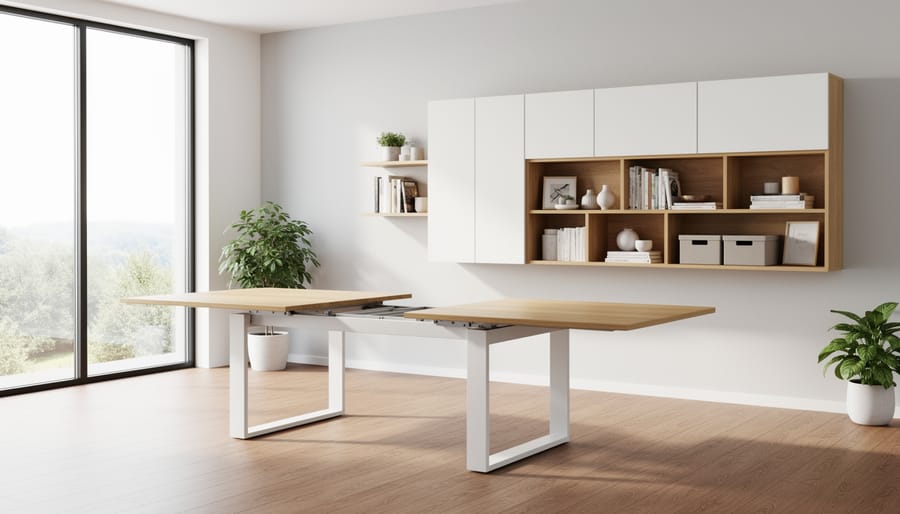
Multi-functional furniture transforms how you live in modern spaces, particularly when square footage comes at a premium. A storage ottoman serves triple duty as seating, hidden organization, and coffee table alternative, look for styles with lift-top lids and internal compartments that handle everything from throw blankets to remote controls. Extendable dining tables adapt from intimate dinners to holiday gatherings, with modern designs featuring sleek mechanisms hidden beneath clean lines rather than bulky leaves. Modular seating systems let you reconfigure your layout as needs change: arrange components into a sectional for movie nights, separate them for conversation areas, or add units as your space grows. These adaptable pieces eliminate the either-or compromises that plague small homes, delivering full functionality without visual clutter. The best multi-functional furniture doesn’t announce its cleverness but integrates storage and flexibility so naturally you forget traditional single-purpose pieces ever made sense.
5. Curved Organic Forms
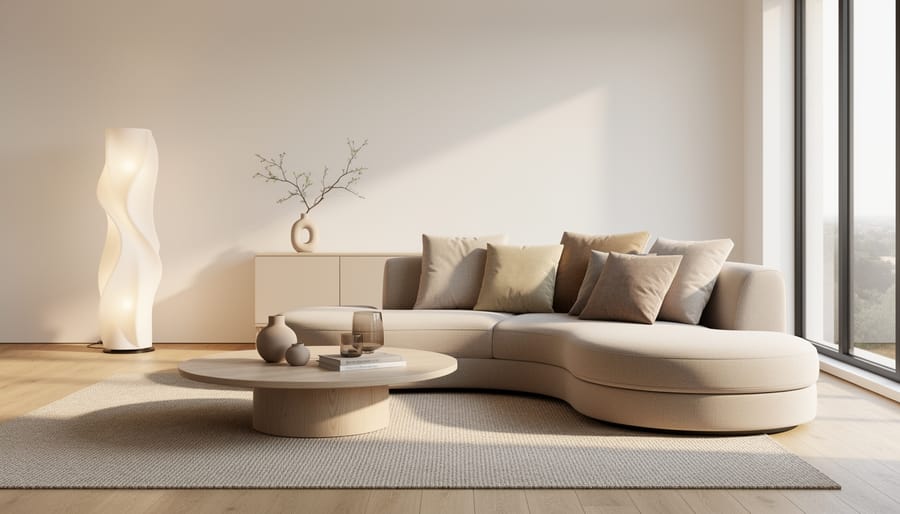
The design world is moving away from stark, angular minimalism toward softer, more inviting shapes. Curved sofas with rounded arms and backs create cozy conversation areas that feel less rigid than their boxy predecessors. Look for dining chairs with arched backs, circular mirrors that soften wall compositions, and rounded coffee tables that improve flow in living spaces.
Architectural details benefit from this shift too. Arched doorways, curved archways between rooms, and rounded wall niches add visual interest without overwhelming a space. These organic forms work particularly well in modern interiors because they introduce warmth and movement while maintaining clean lines. The soft edges create a welcoming atmosphere that balances sleek surfaces like polished concrete or metal fixtures, making contemporary homes feel more livable and less austere.
6. Gallery Wall Arrangements
Gallery walls transform blank spaces into personal showcases, but modern arrangements require restraint. Choose a unifying element, matching frame color, consistent mat width, or a cohesive color palette across all pieces, to maintain visual order. Stick to odd numbers (three, five, or seven pieces) for natural balance, and vary the sizes without creating chaos. Lay out your arrangement on the floor first, spacing frames 2-3 inches apart to prevent the “cluttered bulletin board” effect. Modern gallery walls favor asymmetrical grids over perfect symmetry, with pieces aligned along an invisible center line. Use simple frames in black, natural wood, or white to let the artwork speak. The key is intentional negative space, the wall itself becomes part of the composition, creating breathing room that feels curated rather than crowded.
7. Indoor-Outdoor Flow
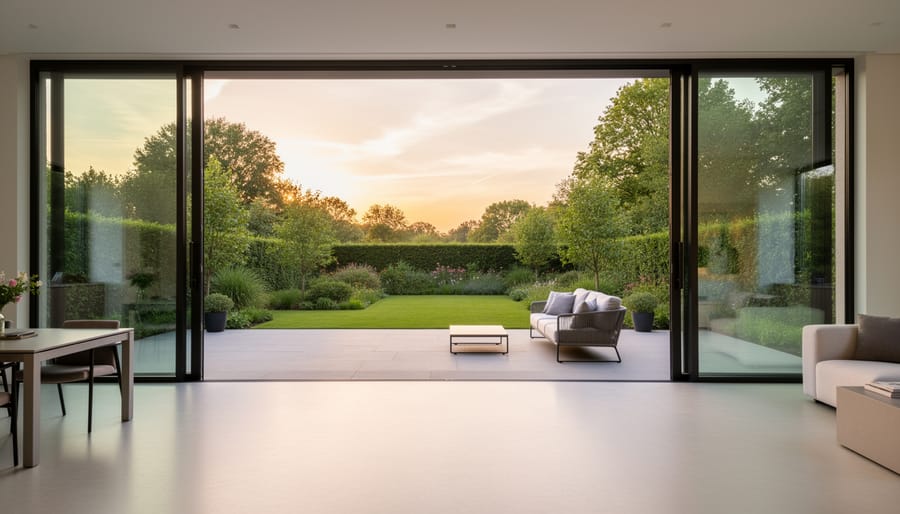
Creating seamless transitions between indoor and outdoor areas defines sophisticated modern living. Start with consistent flooring materials, large-format porcelain tiles, polished concrete, or composite decking that continues from patio through French doors into living spaces eliminates visual breaks. Install floor-to-ceiling glass panels or sliding wall systems that fully retract, physically erasing the boundary during favorable weather. Choose furniture built for dual environments: powder-coated aluminum frames, all-weather wicker, or teak pieces resist moisture while maintaining refined aesthetics indoors. Extend your interior color palette outside through coordinating cushions and planters. Position similar lighting fixtures on both sides of the threshold to maintain ambiance continuity as daylight fades.
8. Integrated Smart Home Technology
Modern technology belongs in modern homes, but the hardware shouldn’t announce itself. Smart thermostats with minimalist interfaces mount flush to walls in matte finishes that blend rather than contrast. Recessed ceiling speakers disappear completely while delivering whole-home audio. Choose lighting systems controlled by discreet wall panels or apps instead of bulky switches, dimmers that fade into white walls maintain clean lines while offering precise control over ambiance.
The goal is invisible functionality. Motorized window shades hide inside ceiling pockets until needed. Voice assistants live inside sculptural objects that double as design pieces rather than sitting on counters as plastic cylinders. When selecting smart devices, prioritize those with customizable housings or retrofit options that work with existing architecture. Technology enhances the modern aesthetic when it requires no visual compromise, letting you adjust temperature, lighting, and entertainment without cluttering surfaces or interrupting sight lines.
9. Bold Accent Walls with Architectural Interest
Accent walls gain modern sophistication when texture creates the drama instead of color alone. Wood slat panels in vertical or horizontal orientation add architectural dimension, walnut or oak strips against a neutral backdrop introduce warmth while maintaining clean lines. Stone cladding brings organic texture, whether natural ledgestone for earthy depth or smooth porcelain tiles mimicking marble for refined elegance.
Dimensional plaster treatments offer sculptural interest through hand-applied techniques that catch light throughout the day. Venetian plaster creates subtle shimmer, while modern relief patterns add geometric depth without overwhelming a space.
Wallpaper has evolved beyond florals to embrace bold geometric patterns, abstract brushstrokes, and textural grasscloth that photographs like art. The key is treating the accent wall as a deliberate focal point, behind a bed, fireplace, or dining area, rather than covering multiple surfaces. One richly textured wall anchors a room while keeping the modern aesthetic intact.
10. Minimal Window Treatments
Modern window treatments have evolved to showcase rather than obscure natural light. Sheer linen drapes in neutral tones filter sunlight while maintaining privacy, creating soft ambient glow throughout the day. Cellular shades offer a streamlined alternative, their clean horizontal lines disappear into window frames while providing excellent light control through adjustable opacity levels.
In spaces where privacy permits, leaving windows completely bare makes the strongest modern statement. This approach transforms views into framed artwork and floods interiors with unobstructed natural light. When covering is necessary, choose hardware in minimal profiles, slim metal rods in matte black or brushed brass barely register visually while supporting lightweight fabrics.
The key is treating windows as architectural features rather than elements requiring decoration. Simple treatments maintain clean sightlines and prevent visual clutter, allowing window proportions to shine while natural light becomes your most impactful design element.
11. Floating Furniture and Wall-Mounted Pieces
Floating furniture transforms modern interiors by creating breathing room between pieces and the floor. Wall-mounted vanities in bathrooms reveal tile or hardwood beneath, making compact spaces feel substantially larger while simplifying cleaning. Floating shelves display books and objects without bulky brackets, maintaining visual lightness that traditional bookcases can’t match.
In living areas, suspended credenzas and media consoles anchor entertainment zones without the heavy footprint of floor-standing cabinets. The exposed floor beneath draws the eye across uninterrupted surfaces, expanding perceived square footage. This approach works particularly well in open-plan spaces where furniture needs presence without blocking sightlines or creating visual barriers between zones.
12. Strategic Greenery and Biophilic Design
Plants transform sterile modern spaces into living environments that feel balanced and breathable. For contemporary interiors, select structural specimens with architectural presence: fiddle-leaf figs, snake plants, or monstera deliciosa in simple ceramic or concrete planters maintain clean lines while introducing organic texture. Vertical gardens on blank walls create dramatic focal points without sacrificing floor space, particularly effective in small urban homes. The biophilic design wellbeing benefits extend beyond aesthetics, improving air quality and reducing stress in homes dominated by glass, metal, and stone surfaces. Group odd numbers of plants at varying heights rather than scattering singles throughout a room. Keep planters minimal, textured white, matte black, or natural terracotta, so the greenery itself becomes the statement, softening hard modern edges without cluttering visual space.
13. Oversized Mirrors for Depth and Light
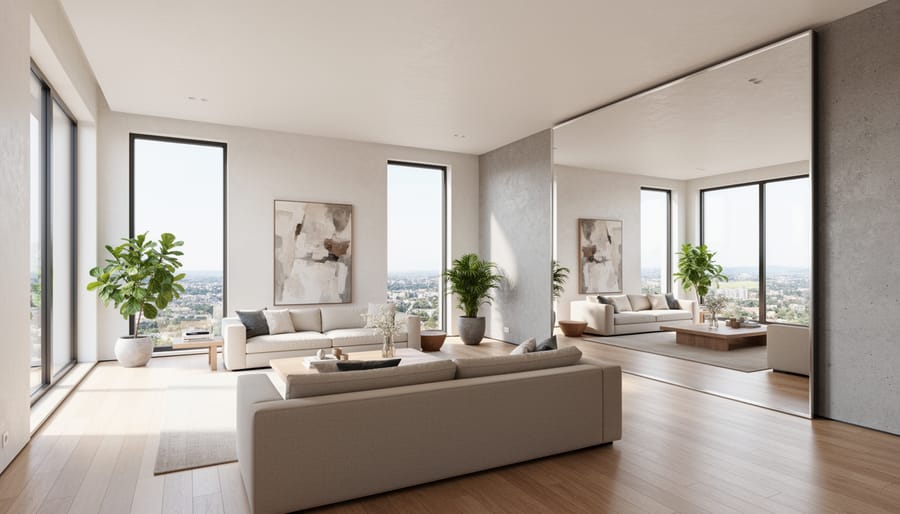
Large-scale mirrors act as spatial architects in modern homes, bouncing natural light deeper into rooms while creating the illusion of expanded square footage. A floor-to-ceiling mirror leaning against a wall in a narrow hallway can visually double the perceived width, while an oversized horizontal mirror above a sofa serves as both artwork and light amplifier. Choose frames in matte black, brushed brass, or frameless beveled edges to maintain clean lines, ornate frames compete with the mirror’s purpose rather than enhance it. Position mirrors opposite windows to maximize daylight reflection, or place them strategically to capture and redistribute artificial light from sculptural fixtures. The key is scale: a mirror measuring at least 36 inches in its smallest dimension creates genuine impact, transforming from functional accessory into architectural statement that defines the modern aesthetic.
14. Mixed Metal Finishes
Gone are the days when designers insisted on matching every metal finish in a room. Modern interiors thrive on the visual interest created by thoughtfully mixed metals, warm brass cabinet pulls alongside cool chrome faucets, black metal light fixtures balanced with copper accent pieces. The key is intentional contrast rather than accidental mismatch. Limit yourself to two or three metal finishes per room and distribute them evenly: if you choose brass drawer pulls in the kitchen, echo that warmth with brass picture frames in the adjacent dining area. Maintain consistent undertones, pair warm metals (brass, copper, gold) together and cool metals (chrome, nickel, stainless) together, or use black metal as a neutral bridge between temperature families. This layered approach adds depth and prevents the sterile uniformity that plagued earlier minimalist trends, creating spaces that feel collected and sophisticated rather than showroom-stiff.
15. Edited Accessory Collections
Modern styling thrives on restraint. Instead of crowding surfaces with trinkets, select three to five meaningful objects per space, a sculptural ceramic vase, a single art book, a textured stone bowl, and give each room to breathe. Group items in odd numbers with varied heights, leaving generous empty space around each piece. This edited approach to decor accessories transforms clutter into curation, allowing individual pieces to command attention rather than competing for it. The eye travels smoothly across simplified surfaces, creating calm rather than visual noise. Quality matters more than quantity: one substantial sculptural object makes a stronger statement than a shelf filled with forgotten souvenirs.
Making Modern Decor Work in Your Home
You don’t need to transform your entire home overnight to embrace modern design. Begin with the changes that create the most dramatic visual impact for the smallest investment: swap outdated light fixtures for sculptural pieces, replace worn textiles with layered neutral fabrics, and ruthlessly edit your accessory collections to display only your most meaningful objects. These three shifts alone can modernize a space without touching walls, floors, or major furniture.
Budget-conscious readers should prioritize oversized mirrors and strategic paint updates, both offering significant transformation for minimal cost. A single large mirror visually doubles your space and amplifies natural light, while a bold accent wall creates architectural interest without the expense of permanent structural changes. Layered neutral textures through throw pillows, area rugs, and window treatments refresh rooms for a fraction of furniture replacement costs.
Modern design doesn’t demand erasing traditional elements you love. Your grandmother’s antique dining table gains fresh relevance when paired with sleek acrylic chairs, and ornate moldings coexist beautifully with minimal furniture and clean-lined accessories. The same timeless kitchen cabinetry that anchors traditional design becomes modern when you update hardware to mixed metals, install sculptural pendant lights, and simplify countertop displays to edited essentials.
Think of modernizing as adding breathing room rather than stripping character. Keep architectural details and cherished heirlooms, but give them space to shine by removing visual clutter around them. This blend of old and new creates homes with both sophistication and soul, honoring your history while embracing contemporary living.
Your Modern Home Questions Answered
Can I create modern decor on a tight budget?
Start with high-impact, low-cost changes like decluttering, rearranging existing furniture to float pieces away from walls, and swapping small accessories for minimal alternatives. Paint an accent wall or invest in one statement light fixture rather than overhauling everything at once.
How do I mix modern pieces with my traditional furniture?
Balance is key, pair one modern element with traditional pieces in the same room, like a sleek glass coffee table with a classic upholstered sofa. The traditional comeback we’re seeing in 2026 actually makes this blend easier and more accepted than ever.
Won’t modern design feel cold and unwelcoming?
Not if you layer textures and incorporate natural materials, think linen throws, wooden accents, and greenery. Modern doesn’t mean stark; it means intentional, and warmth comes from the materials you choose and how you arrange them.
Is modern decor practical for families with kids and pets?
Absolutely. Choose durable fabrics like performance linen and leather, opt for rounded furniture edges, and select washable rugs. Modern’s emphasis on multi-functional furniture actually makes it ideal for active households that need adaptable spaces.
Where should I shop for quality modern pieces without overspending?
Mix investment pieces from specialized retailers with budget finds, buy your sofa and lighting from established brands, then supplement with accessories from mass retailers. Don’t fall for interior design myths that suggest you need expensive everything; curation matters more than price tags.
The key to maintaining cohesion across rooms lies in repeating two or three elements throughout your home, perhaps a consistent wood tone, a shared metal finish, or the same neutral color palette. This creates visual flow without making every space identical. Remember that modern design thrives on editing, so resist the urge to fill every surface. Your home should reflect how you actually live, with spaces that adapt to your daily routines rather than demand careful maintenance.
Modern home decor in 2026 isn’t about following rigid rules or achieving magazine-perfect spaces. It’s about making intentional choices that create sophisticated, functional environments reflecting who you are. The ideas we’ve explored, from sculptural lighting to curated accessory collections, offer flexible starting points that work with various budgets, existing styles, and living situations.
Successful modern design respects your personal preferences while embracing the clean aesthetics and thoughtful simplicity that define contemporary interiors. You don’t need to transform everything overnight. Start with one idea that resonates, whether it’s introducing layered neutral textures or adding strategic greenery. Small, purposeful changes create meaningful impact.
The beauty of modern decor lies in its adaptability. Mix these concepts with traditional pieces you love, experiment with different combinations, and adjust as your needs evolve. Your home should feel like yours first, modern second.
Which idea from our list will you try first? Share your favorite modern decor concepts or tell us how you’re planning to transform your space. We’d love to hear what resonates with your style and which changes you’re most excited to tackle.