
 Posted Bypriscilla
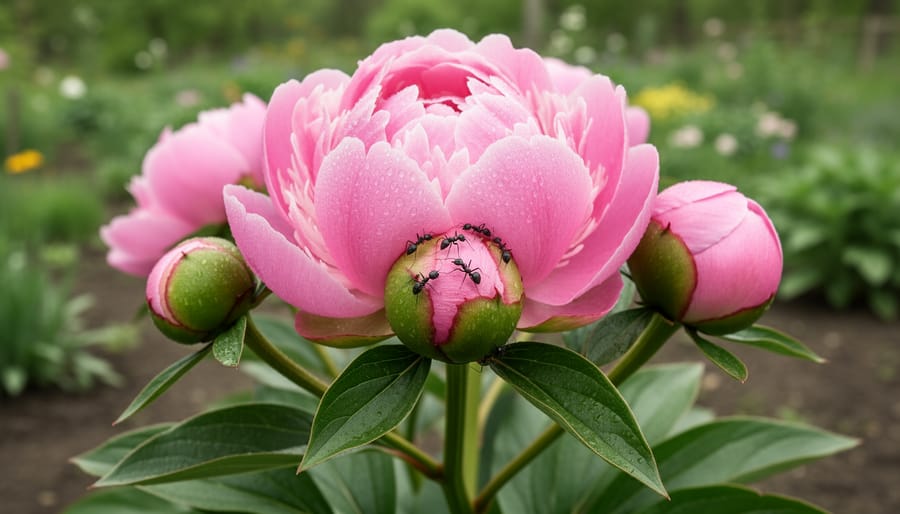
No, peonies don’t need ants to bloom. It’s one of the most persistent myths in the garden world, but the truth is far simpler: ants are attracted to the sweet nectar that peony buds secrete, and they’re merely hitchhikers enjoying a sugary snack. The flowers will open beautifully with or without their tiny visitors, and understanding this frees you to focus on what actually matters for gorgeous peony blooms: proper planting depth, soil preparation, and timing.
This misconception has been passed down through generations, likely because ants appear so reliably on peony buds each spring that gardeners assumed a necessary partnership. In reality, peonies have been blooming successfully for millions of years, long before the ant species we see today even existed. The nectar serves as a protective mechanism against more harmful insects, and ants simply take advantage of this free food source without contributing to the flower’s development.
For those of us who love bringing the elegance of peonies into our landscape design, whether you’re cultivating a cottage garden or adding romantic blooms to a traditional home style this knowledge is empowering. You can confidently plant peonies knowing that success depends entirely on your technique and care, not on maintaining an ant colony. The following guide will walk you through the complete planting process, ensuring your peonies thrive and deliver those spectacular late spring blooms year after year.
The Peony-Ant Myth: What You Really Need to Know
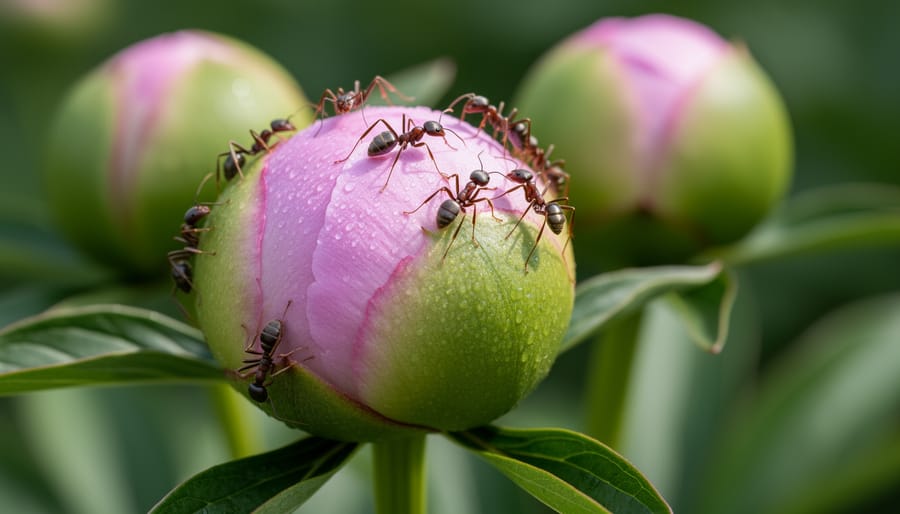
The story that peonies need ants to bloom has been passed down through generations of gardeners, creating one of the most persistent myths in home gardening. The tale likely gained traction because observant gardeners noticed ants swarming over tight peony buds just before they opened. The timing seemed too perfect to be coincidence, leading many to believe the ants were somehow coaxing the blooms to unfurl.
Here’s what’s actually happening: peony buds produce a sweet, sticky nectar from the outer sepals as they develop. This sugary substance is irresistible to ants, who climb aboard for an easy meal. The ants aren’t gardening assistants; they’re simply taking advantage of a food source. Think of it like finding honey on your kitchen counter, you didn’t need the ants to make the honey, and the honey doesn’t need ants to exist.
The buds open through a completely independent biological process driven by the plant’s internal mechanisms, temperature, and light exposure. Controlled studies have proven this conclusively, peonies kept in ant-free environments bloom just as readily and beautifully as those covered in insects. The correlation between ant activity and blooming is purely coincidental timing.
Understanding this truth frees you from unnecessary worry about managing ant populations in your garden. Those magnificent blooms that add such timeless elegance to your landscape beds will arrive on schedule, powered by healthy roots, good soil, and proper care, not by tiny six-legged helpers. You can appreciate ants as harmless visitors rather than viewing them as either essential partners or garden pests to eliminate.
What You’ll Need to Plant Peonies Successfully
Planting peonies successfully doesn’t require a garage full of specialty equipment. You’ll need just a handful of basic gardening tools and materials that set your plants up for decades of stunning blooms. Think of this as assembling everything you need to create a lasting garden feature that’ll elevate your home’s outdoor spaces for years to come.
- Peony roots (bare-root divisions) or container-grown plants from a reputable nursery
- Garden spade or shovel for digging generous planting holes
- Compost or well-aged manure to enrich your soil
- Bone meal or low-nitrogen fertilizer to support root development
- Mulch (shredded bark or compost) for moisture retention and winter protection
- Watering can or garden hose with a gentle spray attachment
- Measuring tape or ruler to ensure proper planting depth
The star of your shopping list is the peony itself. Bare-root divisions, typically available in fall, offer the best value and establish quickly. Look for roots with three to five healthy eyes, those reddish buds that’ll become next season’s stems. Container-grown peonies work too, especially if you’re planting in spring, though they cost a bit more.
Quality soil amendments make a real difference. Peonies aren’t fussy, but they reward good soil preparation with more vigorous growth and better blooms. Your compost adds organic matter that improves drainage and feeds beneficial soil organisms, while bone meal provides the phosphorus that supports strong root systems without pushing excessive leaf growth at the expense of flowers.
Before You Plant: Important Considerations and Warnings
Before you dig that first shovelful of soil, a few crucial decisions will determine whether your peonies thrive or languish. Get these fundamentals right, and you’ll avoid the most common pitfalls that keep gardeners searching for mythical solutions like encouraging ant colonies.
Choose the Right Location
Peonies demand at least six hours of direct sunlight daily. Shade produces lush foliage but few blooms, sending frustrated gardeners down rabbit holes about ants and other folklore. Select a spot with well-draining soil, standing water causes root rot faster than any insect could. If your soil stays soggy after rain, amend it heavily with compost or choose a raised bed.
Timing Matters More Than You Think
Fall planting from September through November gives roots time to establish before winter dormancy. Spring-planted peonies struggle and may skip blooming their first year. In warmer zones, wait until October when soil temperatures drop below 60°F.
This depth rule cannot be overstated. Measure from the top of the eyes (those reddish buds on the root) to the soil surface after settling. Even three inches deep causes years of bloomless frustration.
Give Them Room to Breathe
Understanding how to space peonies prevents overcrowding that invites fungal diseases and reduces airflow. Plan for 3-4 feet between plants, these long-lived perennials expand significantly over decades. Proper spacing also makes it easier to hose off those harmless ants before cutting blooms for indoor arrangements.
How to Plant Peonies: Step-by-Step Process
Preparing Your Planting Site
Choose a spot that gets at least six hours of direct sunlight daily, peonies are sun-lovers and won’t put on their best show in shade. Walk your yard in the morning and afternoon to identify areas that stay bright throughout the day, ideally with good air circulation to keep foliage dry and healthy.
Test your drainage by digging a hole about 12 inches deep and filling it with water. If it drains within a few hours, you’re good to go. If water sits for half a day or more, you’ll need to improve drainage by working in coarse sand or planting in a raised bed. Heavy clay soil that stays waterlogged will rot peony roots before they ever bloom.
Enrich your planting area by working in 2-3 inches of compost or well-aged manure, digging it into the top 12 inches of soil. This organic matter improves soil structure, adds nutrients, and creates the loose, fertile foundation peonies need to establish strong roots. Consider your planting spacing now too, marking spots at least three feet apart to give each plant room to develop into a full, impressive clump that becomes a garden focal point for decades.
Planting at the Perfect Depth
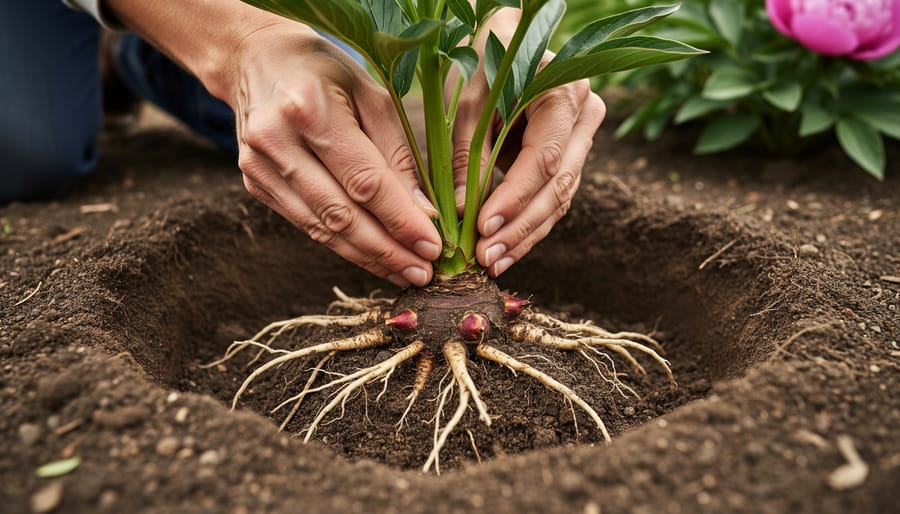
The depth at which you plant your peony determines whether it blooms, get this wrong and you’ll wait years for flowers that never come.
Measure from the top of the peony eyes (the small reddish buds on the root) to the soil surface. These eyes should sit 1 to 2 inches below ground level. In warmer climates (zones 7-8), aim for the shallower end at 1 inch; in colder regions (zones 3-4), plant closer to 2 inches deep.
Here’s a practical trick: lay a ruler or yardstick across the planting hole to represent ground level, then position your peony root so the eyes align at the correct depth beneath it. The eyes should face upward, like tiny pointed buds reaching toward the surface.
Once positioned, hold the root steady and begin backfilling around it with your amended soil mixture. Pack the soil gently but firmly to eliminate air pockets while keeping the eyes at their measured depth. Don’t press down directly on top of the root, work from the sides inward.
If you’re planting container-grown peonies, the same depth rule applies: replant so the eyes sit at the same level they were in the nursery pot, typically 1 to 2 inches down.
Finishing and First Care
Once you’ve positioned your peony root at the perfect depth, gently backfill the hole with your amended soil mixture. Add soil gradually, firming it lightly with your hands as you go to eliminate air pockets without compacting it too densely. The goal is contact between roots and soil while maintaining the loose, breathable structure peonies love.
Water thoroughly immediately after planting, soaking the area until water pools slightly on the surface. This initial watering settles the soil naturally and ensures good root contact. During the first growing season, provide about an inch of water weekly if rainfall is inadequate, keeping soil consistently moist but never waterlogged.
Apply a two-inch layer of organic mulch around your newly planted peony, keeping it a few inches away from the crown to prevent rot. Shredded leaves, compost, or aged bark all work beautifully. This protective layer moderates soil temperature, retains moisture, and gives your planting bed a polished, intentional look that enhances your garden’s overall design.
Resist the urge to fertilize right away. Your peony needs time to establish roots first, and excessive nutrients can actually discourage the strong foundation you’re working to create.
How to Know Your Peonies Are Thriving (And What to Do About Those Ants)
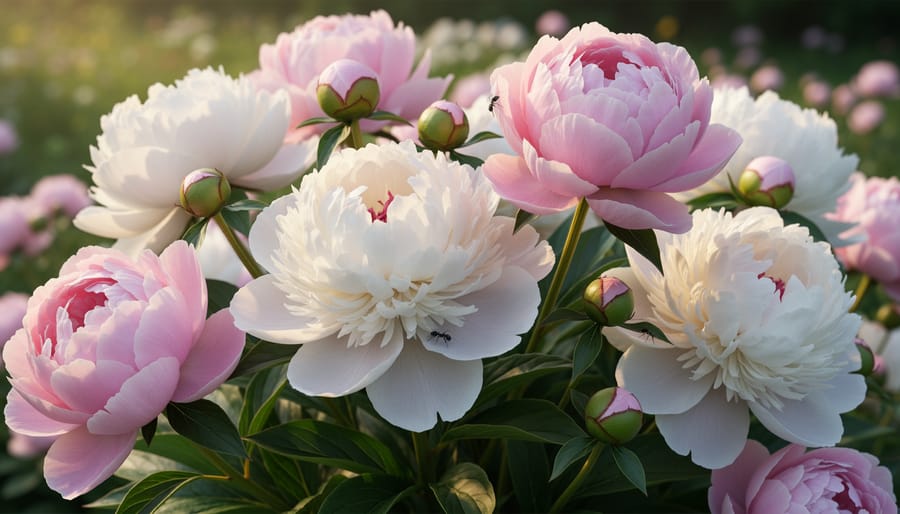
After planting your peonies, patience becomes your greatest gardening virtue. In the first year, expect to see bright red shoots emerge in early spring, developing into attractive foliage that stays lush through summer. These early leaves establish the root system, so don’t be disappointed by the absence of blooms. Most peonies take two to three years after planting to produce their first flowers, with full bloom production often arriving in year three or four.
Healthy peonies display strong, upright stems and deep green leaves without yellowing or wilting. The foliage should remain vibrant throughout the growing season, and you’ll notice the plant expanding slightly each year as the root system matures. When those first buds finally appear, they’ll be covered in sticky nectar that attracts ants, just as nature intended. Remember, the ants aren’t opening the blooms or helping in any way. They’re simply enjoying the sweet secretion while your peony prepares to unfurl on its own schedule.
If your established peonies aren’t blooming after three years, the issue likely isn’t ant-related. Common culprits include planting too deep, insufficient sunlight, or overly rich nitrogen fertilizer that promotes foliage at the expense of flowers. Review your planting depth first, since this remains the most frequent reason why peonies won’t bloom. Those gorgeous, full blooms are worth the wait, transforming your garden into a sophisticated outdoor space that rivals any designer landscape.
Common Questions About Peonies and Ants
Let’s clear up the confusion once and for all. These questions come up constantly in garden communities, and it’s time to put the myths to rest with straightforward answers based on how peonies actually grow.
Do I need to put ants on my peonies?
Absolutely not. Ants are attracted to the sweet nectar that peony buds naturally produce, but they serve no purpose in helping the flowers bloom. Your peonies will open beautifully without a single ant present.
Will my peonies bloom without ants?
Yes, every single time. The buds open through natural plant processes that have nothing to do with ant activity. Ants are simply opportunistic visitors enjoying the nectar, not garden helpers facilitating the bloom.
Are ants harmful to peonies?
No, ants don’t damage peonies. They’re harmless guests that disappear once the nectar dries up after blooming. If you’re cutting flowers for indoor arrangements, a quick rinse with the hose will send them on their way.
Why won’t my peonies bloom?
The most common culprit is planting depth. Peony eyes buried more than two inches deep won’t produce flowers, regardless of ants. Other factors include insufficient sunlight, overly rich soil that promotes foliage over blooms, or simply patience since new plantings typically take two to three years to flower.
The depth issue trips up more gardeners than anything else. If your established peonies suddenly stop blooming, check whether mulch or settling soil has buried the crown too deeply. Gently scraping away excess soil in early spring can revive a non-blooming plant within a season or two. Remember that peonies are remarkably long-lived once properly situated. Give them the right conditions from the start, ignore the ant myths, and you’ll enjoy decades of spectacular blooms that elevate your garden’s design year after year.
Now that you know the truth about peonies and ants, there’s nothing holding you back from adding these spectacular blooms to your garden. You don’t need to worry about attracting ant colonies or performing any special rituals to coax those buds open. Just follow the straightforward planting steps we’ve covered, give your peonies the sunny spot and proper depth they crave, and let nature do what it does best.
Whether you’re designing a cottage-style garden bursting with traditional charm or incorporating elegant statement plantings into a sleek, modern landscape, peonies deliver versatility and year-after-year beauty. Their lush blooms become conversation starters, their foliage provides structure through summer, and their reliability makes them a worthy investment in your home’s outdoor appeal.
We’d love to hear about your peony-growing journey. Have you planted peonies recently? Are you planning to add them to your garden this fall? Share your experiences, photos, or questions in the comments below. Your insights might just inspire another gardener to take the plunge and plant these timeless beauties.