
 Posted Bypriscilla
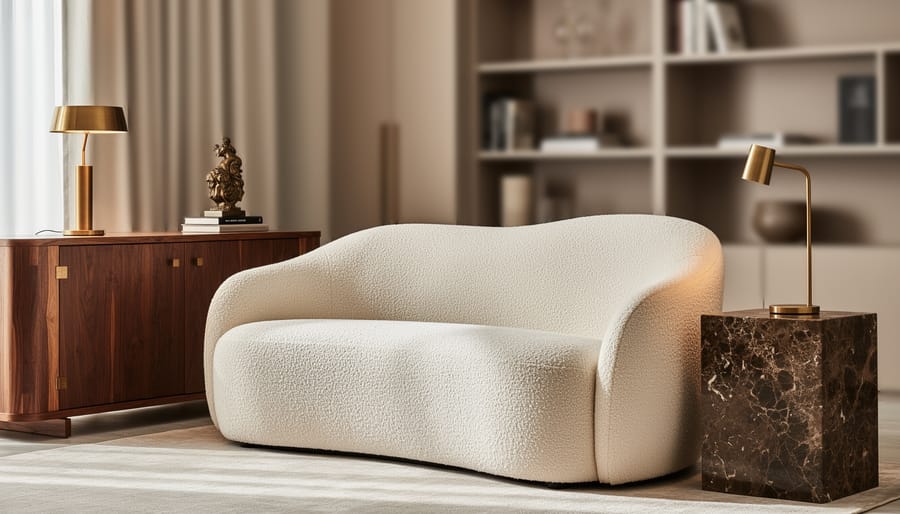
Contemporary luxury interior design is the art of pairing clean, current lines with rich materials and quiet craftsmanship, so a room feels both fresh and deeply considered. It’s defined by a restrained palette, tactile finishes like marble, brushed brass and bouclé, furniture with sculptural presence, and a sense of space that lets each piece breathe. Think calm, not cluttered. Generous, not showy.
What sets it apart from plain modern design is warmth. A contemporary luxury room borrows from tradition, whether that’s a antique console beside a sleek sofa or hand-finished joinery behind minimalist shelving, and the result feels layered and lived in rather than staged. Katharine Pooley’s work is a fine example of this balance, where polished glamour meets timeless, welcoming comfort.
The good news is that you don’t need a vast budget or a full renovation to get there. A few well-chosen investments in lighting, textiles and one standout piece can shift a space dramatically. In this guide, we’ll define the style, break down the palette, materials, furniture and styling choices behind it, and flag the common mistakes to avoid. Have your own take on blending old and new? We’d love to hear it in the comments.
What Contemporary Luxury Really Means
Contemporary luxury interior design is about how a home feels as much as how it looks. It sits comfortably between two extremes: the stripped-back austerity of pure minimalism and the heavy ornamentation of formal traditional rooms. Instead, it borrows the best from both, pairing clean, modern lines with warmth, depth, and a sense of occasion.
What has really shifted is the meaning of “luxury” itself. Today it is less about excess and more about craftsmanship, comfort, and considered detail. A sofa you actually want to sink into, a hand-finished joint in a walnut table, a fabric that feels as good as it looks: these quiet touches signal quality far more than gilt and glitter ever could.
Crucially, this style doesn’t turn its back on the past. It honours timeless design values such as good proportions, enduring materials, and furniture built to last, then updates them for the way we live now. Think of a classic silhouette reupholstered in a modern textured weave, or an antique mirror hung above a sleek, streamlined console.
A few terms come up again and again when talking about this look, so it helps to have them straight:
- Contemporary vs. modern
- “Modern” refers to a specific historical design movement, while “contemporary” describes what is current and evolving, so it can happily blend influences from different eras.
- Layering
- Building depth by combining varied textures, tones, and materials so a room feels rich rather than flat.
- Bespoke
- Furniture, joinery, or soft furnishings made to order for a particular space or person, rather than bought off the shelf.
- Statement piece
- A standout item, such as a sculptural light or an eye-catching armchair, that anchors a room and sets its character.
Understood this way, contemporary luxury feels welcoming rather than intimidating. It invites you to live in your rooms, not just admire them, which is exactly why it has become such a favourite among design lovers.
The Katharine Pooley Approach to Luxurious Interiors
Layered Richness Without the Clutter
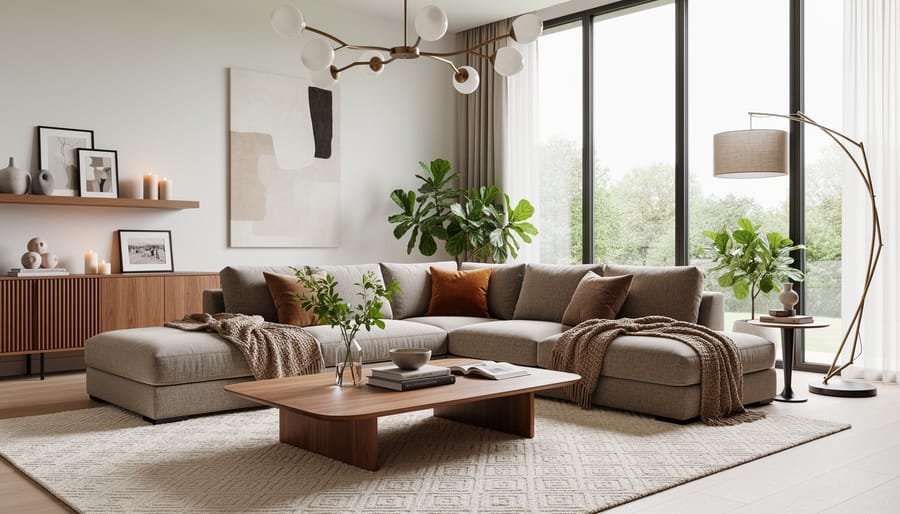
Layering is where a luxurious room either comes alive or tips into chaos. The difference usually comes down to restraint. Instead of filling every surface, think in terms of a few well-chosen tones and a generous mix of textures, so the eye has something rewarding to discover without being overwhelmed.
A good starting point is a tight colour story. Pick two or three closely related shades, say warm ivory, soft taupe and a deeper stone, then build interest through touch rather than contrast. A velvet cushion beside a nubby bouclé chair, a silk lampshade against a honed marble tabletop, a wool rug underfoot: each material catches the light differently, which gives depth while the palette stays quiet.
Edit as you go. Every piece should earn its place, whether through craftsmanship, comfort or sentimental value. If two objects compete for attention, let one go. Leave some breathing room around your favourite items, because negative space is what makes the layered areas feel intentional. When a room has richness and calm in equal measure, you’ve got it right.
Where Tradition Meets Modern Living
Tradition is not the enemy of a contemporary luxury interior. It is often the thing that gives a room its credibility. Classic proportions, such as generous ceiling heights, well-scaled mouldings and sofas with a confident, grounded stance, create a sense of ease that trends alone can’t fake. When those foundations are right, you can introduce sleek, modern lines without the space feeling thin or transient.
Heirloom-quality craftsmanship does a similar job. A hand-finished cabinet, a hand-knotted rug or a carved console carries a depth that mass-made pieces rarely match, and it ages beautifully. Set against a pared-back, clean-lined armchair or a streamlined marble table, these pieces stop looking dated and start looking deliberate.
Period-inspired details work best when they’re edited with a light hand. A panelled wall in a soft tone, a fluted column or a classic brass fitting can echo the past while the rest of the room stays crisp. The same thinking applies to any space, whether you’re styling a living room or revisiting traditional kitchen design with a modern twist.
The result feels layered, welcoming and quietly confident.
The Building Blocks of a Contemporary Luxury Room
A Palette That Feels Rich and Restful
Start with a base of sophisticated neutrals: warm stone, soft greige, oatmeal, or a creamy off-white. These calm backdrops let the craftsmanship of your furniture and finishes take centre stage. Then bring in one or two deep jewel accents, such as emerald, sapphire, or aubergine, through a velvet armchair, a lacquered side table, or a pair of cushions.
Light should guide your choices. North-facing rooms can feel cool, so lean into warmer neutrals and richer, saturated tones to keep things inviting. Sunny, south-facing spaces can handle crisper whites and cooler greys without losing their glow.
Room size matters too. In smaller spaces, a tonal scheme, where walls, curtains, and upholstery sit within the same colour family, makes the walls feel like they recede. In larger rooms, you can be bolder with contrast. Whichever route you take, layering depth through slightly different shades and finishes keeps a restrained palette feeling rich rather than flat.
Materials and Finishes Worth Investing In
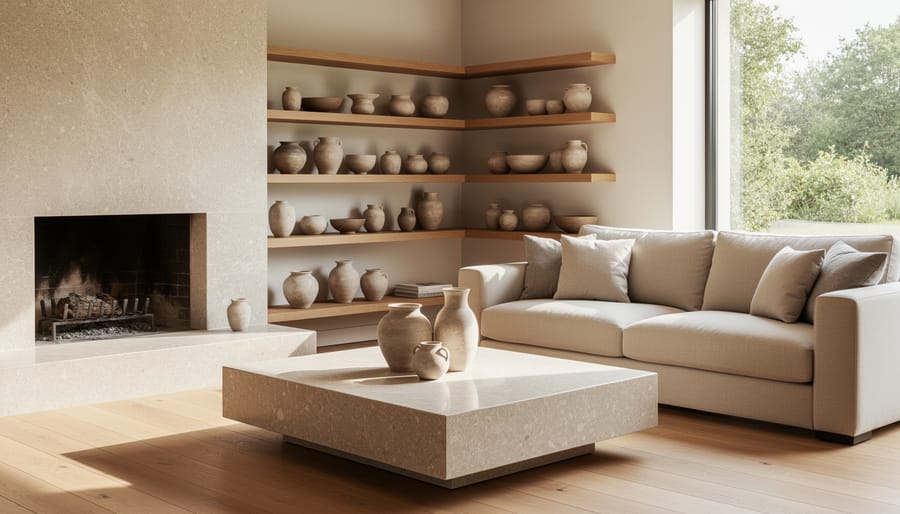
Luxury lives in what you can touch. A few well-chosen materials do more than a dozen competing ones, so pick a hero or two and let the rest play supporting roles. Keep the shapes grounded in classic proportions then let the finishes add the modern polish.
| Material | The look it delivers | Care considerations |
|---|---|---|
| Natural stone | Veined, enduring, quietly grand | Seal regularly; wipe spills quickly |
| Fine woods | Warmth and depth with visible grain | Keep out of harsh sun; wax or oil occasionally |
| Velvet and silk | Soft sheen and a sense of occasion | Use on lower-traffic pieces; vacuum gently |
| Bouclé | Cosy, sculptural texture | Brush lightly; watch for snagging |
| Metallic accents | Glints of light and crisp definition | Polish sparingly; choose finishes that age well |
To blend them, think in ratios. Let one material lead, give a second a supporting role, and use a third as a small flourish. A marble side table beside a bouclé chair, with a brushed brass lamp catching the light, feels layered rather than loud. Repeat each finish at least twice in a room so the eye reads it as intentional.
Statement Furniture and Sculptural Lighting
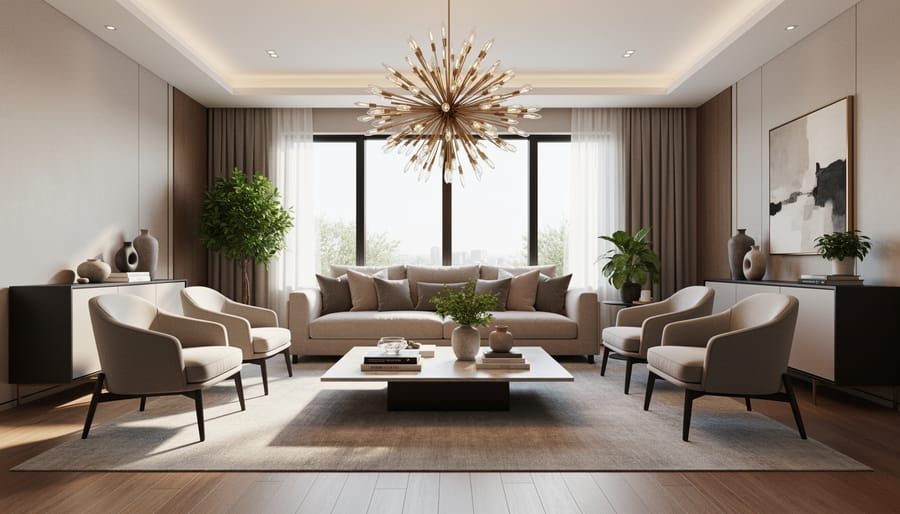
In a contemporary luxury room, a few confident pieces do more than a houseful of lesser ones. Choose one or two that earn their place through shape, craftsmanship, and presence, then let everything else support them.
A sofa with a sweeping curve or a sculpted back can anchor a whole living space. Pair it with a handcrafted console whose lines catch the eye, perhaps with a hand-finished top or a sculptural base, and you’ve built a focal point without a single extra ornament.
Lighting deserves the same attention. A sculptural chandelier or an artful floor lamp works like jewellery for a room, adding glow and drama in equal measure. Hang it a little lower than you think you should, particularly over a dining table, so it feels intentional rather than tucked away.
Leave breathing room around each statement piece. Generous space lets the form read clearly, and it keeps the room feeling calm. Think of it as curating a gallery, where fewer, better objects tell a richer story.
Art, Accessories, and Personal Stories
A luxurious room can look flawless and still feel like nobody lives there. Art, books, and treasured objects are what fix that. They tell visitors who you are, where you’ve been, and what you love.
Start with art you genuinely respond to rather than pieces chosen to match the cushions. One large work can anchor a wall beautifully, while a gallery grouping suits a hallway or staircase. Mixing eras works well here: a vintage landscape beside a bold contemporary canvas shows the blend of old and new at its most natural.
Then add the layers that carry a story. Stack coffee table books by colour or subject, and tuck a few beloved paperbacks among them. Display a ceramic bought on holiday, an inherited candlestick, or a framed sketch from a friend.
Edit as you go. A handful of meaningful objects, given room to breathe, feels curated and personal, never cluttered. If a piece makes you smile every time you pass it, it belongs.
Bringing the Look Home, Whatever Your Budget
Common Mistakes That Dull the Luxe Effect
A room can have every right ingredient and still fall flat, usually because of a few easy-to-fix habits. The first is over-matching. A sofa, armchairs and coffee table bought as a set read as showroom-perfect, which is the opposite of luxe. Mix a tailored sofa with a sculptural accent chair in a related but different tone, and let the wood finishes vary slightly.
Scale is the next culprit. A dainty rug under a generous seating area makes everything feel adrift, while an oversized piece in a small room swallows the space around it. Choose a rug large enough for at least the front legs of your main furniture to rest on it, and leave breathing room around each statement piece.
Then there’s illumination. A single overhead fitting flattens even the finest materials, so it pays to build proper lighting layers: ambient light for the whole room, task lamps where you read or work, and softer accent glows to pick out art or texture. Dimmers are a small investment that transforms the mood.
Finally, watch for too many competing focal points. If a bold chandelier, a dramatic mirror, a vivid artwork and a patterned wall all shout at once, none of them wins. Pick one hero, let two or three supporting pieces play quietly beside it, and give the rest of the room room to rest.
Your Questions About Contemporary Luxury Interiors
Readers often ask the same few things about this style, so here are quick, honest answers.
Can a luxurious interior still be family-friendly?
Absolutely. Choose performance velvets, tightly woven wools, and durable stone, and keep delicate pieces in rooms with less foot traffic. Comfort is part of luxury, so soft seating and forgiving finishes make a home feel more lavish, not less.
Does luxury have to mean expensive?
Not at all. Luxury here comes from quality, restraint, and thoughtful layering, so a few well-made pieces and good lighting will do more than a room full of costly things. Build gradually and edit as you go.
How do I mix antiques with modern pieces?
Let one or two antiques act as anchors, then pair them with clean-lined contemporary furniture in a shared palette or material. The contrast is what makes both feel fresh.
What is the easiest first step toward this look?
Start with lighting and texture. A sculptural lamp or a velvet cushion can shift a room’s mood without a full redesign.
Have a question we didn’t cover? Share it with the community, and we’ll happily keep the conversation going.
Contemporary luxury, at its best, isn’t about how much you can put into a room. It’s about how a space makes you feel the moment you walk in: calm, welcomed, quietly impressed. That’s the thread running through Luxurious Interior Design by Katharine Pooley, where craftsmanship, comfort, and thoughtful layering do the heavy lifting, and tradition and modern living sit side by side without a fuss.
You don’t need a grand budget or a blank canvas to borrow the approach. Start with a palette you love, invest in a few pieces with real character, edit with a steady hand, and let personal touches keep the room human.
We’d love to see how you put these ideas to work. Share your own luxe-inspired rooms, or bring your questions, to the community, and keep exploring the site for more design inspiration. Your next favorite room might start with a conversation.