
 Posted Bypriscilla
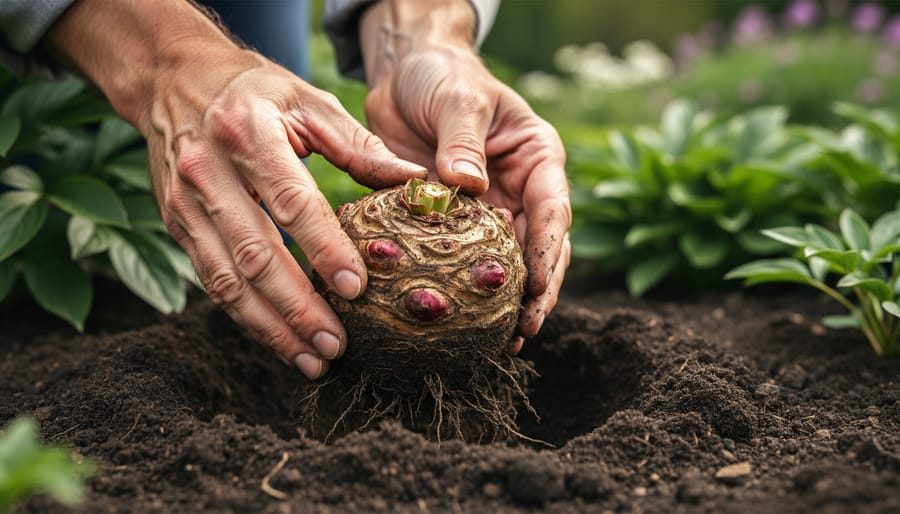
Your peonies aren’t blooming because they’re planted too deep. In most cases, peony eyes (the small reddish buds on the roots) should sit no more than two inches below the soil surface in cold climates, and even shallower in warmer regions. When buried too far down, these garden showstoppers produce plenty of lush foliage but refuse to flower, leaving you with nothing but green leaves where those sumptuous blooms should be.
If depth isn’t the culprit, you’re likely dealing with one of several other common issues: insufficient sunlight, overfertilization, immature plants, or improper division. Many frustrated gardeners have unknowingly followed old peony rules that sound authoritative but actually work against bloom production.
The good news? Most peony problems are completely reversible once you identify the root cause. These perennials are remarkably forgiving, and a few strategic adjustments can transform your bloomless plants into the spectacular floral display you’ve been waiting for. Whether your peonies have never bloomed or suddenly stopped producing flowers after years of reliable performance, understanding what’s gone wrong is the first step toward bringing them back to their full glory.
This guide walks you through each potential cause in order of likelihood, helping you diagnose your specific situation and take the right corrective action. Let’s get those blooms back where they belong.
Your Peony Is Planted Too Deep (The Most Common Culprit)
If you’ve had healthy peony foliage for years but no flowers, there’s an excellent chance your plant is buried too deep. This is the single most common reason peonies refuse to bloom, and it happens more often than you’d think, sometimes from settling soil, sometimes from well-meaning gardeners adding mulch year after year, and sometimes from planting mistakes made years ago that are only now showing their consequences.
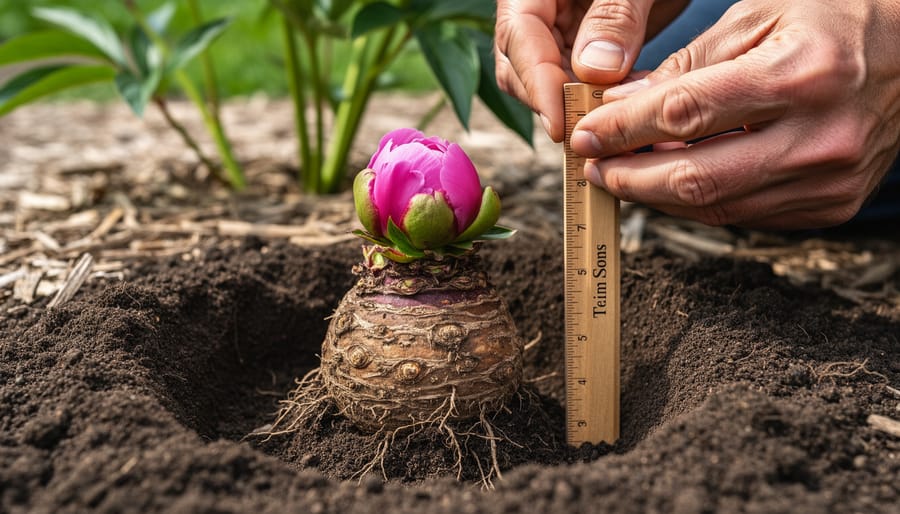
Peony eyes (those reddish buds on the crown where stems emerge) need to sit just 1 to 2 inches below the soil surface in cold-winter climates, and only about 1 inch deep in warmer zones. When planted deeper than this, the plant receives a confusing signal. It focuses energy on survival and foliage production rather than the vulnerable, energy-intensive process of flowering. The eyes essentially think they’re still underground, waiting for better conditions.
Many gardeners believe planting deeper protects the roots from cold or drought, but this is completely backward. Peonies are remarkably cold-hardy, and their roots naturally grow deep regardless of crown depth. What deeper planting actually does is smother the crown’s ability to sense seasonal changes and trigger blooming.
To check your planting depth, carefully excavate soil around the base in spring or fall until you can see the crown and measure. If you discover the problem, don’t panic, this is fixable. Wait until fall when the plant goes dormant, lift the entire root ball, and replant at the correct depth. When you space peonies correctly and at proper depth during replanting, you’re setting the stage for spectacular blooms within a couple of seasons.
Your Plant Is Simply Too Young to Bloom
Your newly planted peony isn’t being stubborn, it’s just young. This might be the most common source of gardener frustration, yet it’s completely normal.
Peonies need time to establish their root systems before they channel energy into producing those spectacular blooms. Bare-root divisions typically require 2-3 years after planting to flower reliably. That first year, they’re focusing entirely underground, developing the extensive root network that will support decades of blooms. You might see a single flower or two in year two, but year three is when most peonies truly hit their stride.
Container-grown peonies have a slight advantage. Because they’re already established in their pots with mature roots, they often bloom within the first year after transplanting, sometimes even the same spring if you plant them early enough. But even these can sulk for a season if they experience significant transplant shock.
The myth that peonies should bloom immediately comes from seeing mature plants in nurseries or garden centers already loaded with buds. Those plants are years old, not fresh plantings. Young divisions from a friend’s garden or mail-order bare roots are essentially starting from scratch, regardless of how large the root piece looks.
If your peony is under three years old and otherwise healthy, showing good foliage growth and no signs of disease, patience is your only job. Mark your calendar and wait. The payoff is worth it.
Light Conditions Aren’t Meeting Their Needs
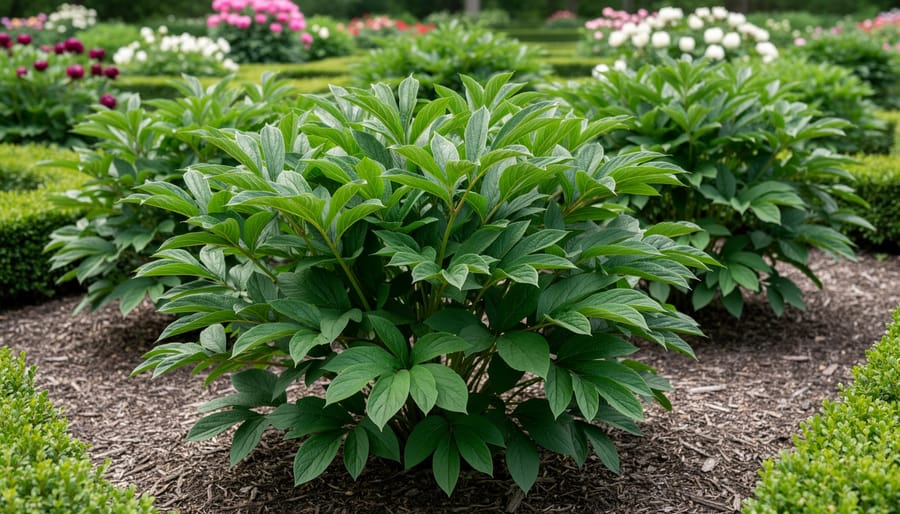
Peonies demand serious sun, specifically, six to eight hours of direct sunlight daily to produce their famously abundant blooms. This isn’t a flexible guideline. While the plants themselves will survive with less light, their flowering capacity drops off sharply once they receive fewer than six hours of full sun.
The myth that peonies tolerate shade persists because these tough perennials will maintain healthy foliage in part shade. The plants don’t die or look distressed. They simply refuse to bloom, or produce only one or two weak flowers instead of the dozen or more you’d expect from a mature plant. That lush green foliage in your shady border might look vigorous, but it’s masking the light deficit that’s strangling flower production.
What makes this problem particularly insidious is how gradually it develops. A peony planted in a sunny spot ten years ago may now sit in dappled shade as nearby trees matured and their canopies expanded. A neighbor’s new fence or shed, a growing hedge, even your own house addition can incrementally steal the light your peonies need. By the time bloom failure becomes obvious, the landscape around that plant has changed so slowly you may not connect the dots.
Check your peony’s light exposure throughout the day, not just at one moment. Morning sun alone won’t cut it, they need continuous exposure. If tree growth is the culprit, selective pruning to raise the canopy or thin branches can sometimes restore enough light. Otherwise, moving the plant to a sunnier location during its dormant period (fall) is the only real solution. These plants can live for decades, so finding them the right spot is worth the effort.
Pruning Mistakes Are Costing You Next Year’s Flowers
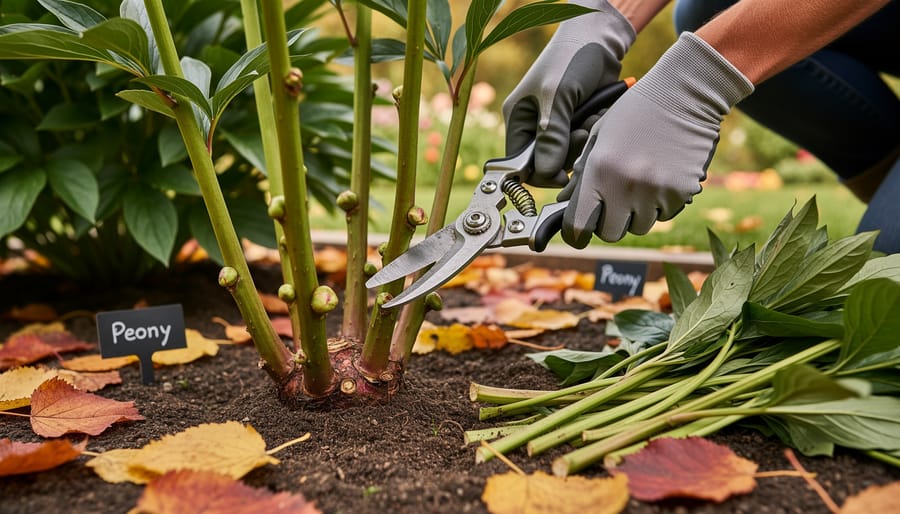
Pruning timing plays a surprisingly large role in next year’s bloom production, yet many gardeners unwittingly sabotage their peonies by tidying up too soon. When you cut back foliage in early fall while it’s still green, you’re removing the plant’s solar panels before it finishes storing energy for next season’s flowers. Those leaves continue photosynthesizing well into autumn, building the carbohydrate reserves that fuel bud development.
The myth that peonies need aggressive pruning throughout the growing season causes unnecessary bloom loss. Unlike roses or other repeat bloomers, herbaceous peonies don’t require heavy maintenance cutting. In fact, excessive pruning weakens the plant and directly reduces flowering potential.
Here’s the proper pruning timeline for maximum bloom production:
- Summer deadheading (optional): After flowers fade, remove spent blooms just below the flower head if you find them unsightly, but leave all foliage intact.
- Late fall cleanup: Wait until after the first hard frost when foliage naturally yellows and begins to collapse, typically October or November depending on your zone.
- Cut herbaceous varieties to ground level, removing all foliage to prevent overwintering of fungal diseases like botrytis.
- Dispose of cut foliage in yard waste, not your compost pile, to avoid disease spread.
For tree peonies, which have woody stems, you’ll follow different rules. Don’t cut these back at all, just remove dead wood in early spring.
The key difference many gardeners miss is that deadheading spent flowers doesn’t harm the plant because you’re only removing the seedpod, not the energy-producing leaves. Fall cleanup, however, must wait until the foliage has completed its job. That patience translates directly into next spring’s flower count.
Too Much Nitrogen Is Fueling Foliage Over Flowers
When your peony produces abundant, lush green foliage but refuses to bloom, nitrogen overload is likely the culprit. Peonies don’t demand heavy feeding, quite the opposite. Too much nitrogen, particularly from nearby lawn fertilizers or nitrogen-rich amendments like fresh manure, pushes the plant to prioritize leaf production over flower development.
This happens because nitrogen fuels vegetative growth. When a peony receives excessive nitrogen, it channels energy into producing more stems and foliage rather than forming the buds needed for those spectacular blooms. The plant looks healthy, even vigorous, which makes the lack of flowers particularly frustrating.
Lawn fertilizer runoff is a sneaky offender. If your peonies sit near regularly fertilized grass, they’re absorbing that high-nitrogen feed every time you water or it rains. Similarly, well-meaning gardeners sometimes apply compost or manure thinking they’re helping, when in reality these amendments provide far more nitrogen than peonies need.
The fix? Skip the fertilizer entirely if your peony has rich, healthy foliage. If you do fertilize, choose a balanced formula (10-10-10) or one slightly higher in phosphorus (5-10-5), which supports bloom production. Apply in early spring as shoots emerge and again after flowering, using about two tablespoons per plant. Avoid fall feeding, which encourages tender new growth vulnerable to winter damage.
Create a buffer between lawn areas and your peonies if possible, and never apply lawn fertilizer within three feet of the plants.
Winter Chill Requirements Aren’t Being Met
If you’re gardening in USDA zones 8 or warmer, winter temperatures might be the hidden culprit behind your peony’s bloom strike. Most herbaceous peonies evolved in regions with harsh winters, and they’ve retained that genetic need for prolonged cold exposure to properly set flower buds.
The technical requirement is measured in “chill hours,” which count the cumulative hours between 32°F and 45°F during winter dormancy. Classic peony varieties need 500 to 1000 chill hours to trigger normal bud development. Without adequate winter cold, the plant survives just fine and may produce healthy foliage, but the biochemical process that initiates flowering simply doesn’t occur. This explains why peonies thrive in Minnesota but languish bloomless in coastal Southern California or central Florida.
Contrary to the myth that peonies grow everywhere, they’re actually quite geographically limited by climate. If you’re in a borderline warm zone (7b-8a), you’re not completely out of luck, but you’ll need to choose wisely. Intersectional (Itoh) peonies and certain tree peony varieties tolerate lower chill hour requirements, sometimes performing acceptably with 400-600 hours. Single-flowered herbaceous varieties also tend to be less demanding than doubles.
Before you give up on peonies entirely in a warm climate, track your actual winter temperatures for a season. Microclimates matter. A north-facing bed in zone 8a might accumulate enough chill hours, while a sunny south exposure won’t. If the numbers don’t add up, consider this a fundamental mismatch rather than something you can fix.
Other Factors That May Be Interfering with Blooms
While the major bloom-blocking culprits usually explain most peony problems, a handful of less obvious factors can also sabotage your flowers. If you’ve ruled out crown planting depth light, and fertilizer issues, look for these secondary problems.
Botrytis blight, a fungal disease, can devastate emerging buds before they ever open. You’ll notice blackened, wilted stems and buds that turn brown and fail to develop. The disease thrives in wet spring weather and spreads through infected plant debris. If you spot these symptoms, remove affected parts immediately and improve air circulation around plants.
Transplant shock from recent division or moving can delay blooming for a season or two, even if you did everything correctly. Peonies hate being disturbed and need time to re-establish their root systems before channeling energy into flowers.
Root competition from nearby trees and shrubs steals moisture and nutrients your peonies need. As trees mature, their root zones expand, gradually starving perennials that once thrived in the same bed. You may need to avoid overcrowding by relocating plants away from aggressive root systems.
Heavy clay soil that doesn’t drain well creates waterlogged conditions that rot roots and prevent bud formation. Peonies need consistent moisture but won’t tolerate standing water.
Finally, late spring frosts can zap emerging buds overnight. If your area experiences unpredictable temperature swings in April or May, the swollen buds you were counting on can turn to mush after a hard freeze, leaving you with foliage but no flowers that season.
What You Can Do Right Now to Encourage Blooming
Start by evaluating your plant’s age and planting depth, the two most likely culprits. If you planted your peony within the last three years, the lack of blooms may simply require waiting another season or two. For established plants, carefully dig around the base in early spring or late fall to check whether the eyes sit more than two inches below the soil surface. If they’re buried too deep, autumn is the ideal time to replant peonies at the correct depth, allowing roots to reestablish before winter dormancy.
Next, walk around your garden at different times of day to confirm your peony receives at least six hours of direct sun. If nearby trees or shrubs have grown to cast shade where there was once full sun, you’ll need to decide whether to prune the competing plants or relocate your peony this fall. Moving a mature peony sets it back two years, so only transplant if light conditions are genuinely inadequate.
Review your fertilization approach for the coming season. If you’ve been feeding peonies heavily or they sit near a regularly fertilized lawn, skip nitrogen-rich products entirely. Apply a balanced 5-10-10 fertilizer in early spring when shoots emerge, then again after blooming finishes. Resist the urge to overfeed in hopes of forcing blooms.
Finally, adjust your expectations. Peonies work on their own timeline, building energy reserves underground before they reward you with flowers. If you’ve corrected a planting depth issue this fall, don’t expect blooms the following spring. The plant is focusing on root recovery, not flower production. Mark your calendar for the season after next, when your patience will likely pay off with the spectacular display you’ve been waiting for.
The good news? A non-blooming peony almost always has a fixable cause, and you’ve now got the knowledge to diagnose it. Start with planting depth, check those eyes aren’t buried more than two inches below the surface, because that’s the issue behind most bloom failures. Then work through the checklist: light exposure, plant age, fertilizer choices, pruning timing, and winter chill. One of these factors is likely your culprit.
Throughout this article, we’ve tackled common myths that lead gardeners astray, the belief that deeper is safer, that peonies bloom instantly, that they’re shade-lovers, or that they need aggressive feeding. Garden folklore has its charm, but accurate information gets you blooms. When you understand what peonies actually need rather than what you’ve heard whispered over garden fences, these plants reward you spectacularly.
Can I move a non-blooming peony to fix the problem?
Yes, fall is the ideal time to dig up and replant a peony at the correct depth or in a sunnier location. Expect it to take another 2-3 years to bloom after moving, as transplanting sets the clock back temporarily.
Do ants affect whether my peony blooms?
No, ants are harmless visitors attracted to the sweet nectar on developing buds. They don’t help or hurt bloom production, they’re just along for the ride.
Will my peony ever bloom if it hasn’t after five years?
If a mature plant hasn’t bloomed in five years, something environmental is wrong, usually depth, light, or excess nitrogen. Once you correct the issue, blooms should follow within one to two seasons.
Take a honest look at your peony’s growing conditions this week. Measure that planting depth, count the sun hours, review your fertilizing habits. Most fixes are straightforward, though some require patience as the plant resets.
We’d love to hear what worked for your stubborn peonies. Share your bloom breakthrough stories in the comments, your experience might be exactly what another frustrated gardener needs to hear.