
 Posted Bypriscilla
Decorating your home for Christmas takes a single weekend and a handful of basic supplies, and the method is simple: start with a plan, work from the largest focal points down to the smallest details, and check your lighting and safety as you go. Most people can finish a full-home refresh in six to eight hours spread across a day or two. The only real prerequisite is a clear idea of where your tree, lights, and main displays will go before you open a single storage box.
Why does that order work? Big pieces like the tree, mantel, and entryway set the tone for everything else. Once they’re in place, ornaments, garlands, and candles fall into step instead of competing for attention. Skip the planning and you’ll end up moving a stubborn fir three times or discovering that your favorite wreath clashes with the new color scheme.
The good news is that there’s no single right look. A traditional home thrives on red velvet ribbon, evergreen boughs, and heirloom glass. A modern space might lean on matte metallics, sculptural branches, and a restrained palette. A small apartment can deliver just as much sparkle with a slim tree and a well-dressed shelf. In the steps ahead, we’ll cover the tools you need, the safety rules worth following, and a room-by-room process that works for every style. Tell us in the comments which look you’re going for this season.
Gathering Your Tools, Materials and Decor Basics
Before you unpack a single bauble, a little preparation saves a lot of frustration. Having the right kit to hand means you can decorate in one calm afternoon rather than making three trips to the shops. Here’s a checklist to gather first.
- Hang and secure: a measuring tape, removable hooks, florist wire, and a floor-safe ladder or sturdy step stool.
- Light and power: plug-in light timers, good-quality extension cords, and spare bulbs or fuses for your light strings.
- Style and sparkle: wired ribbon in two or three coordinating widths, plus labelled storage bins for tidy packing later.
Once the practical kit is sorted, think about the core decor categories you’ll be working with. Lights set the mood and do the heaviest lifting, so choose warm white for a classic glow or a cooler tone for a crisp, modern feel. Greenery, whether real or faux, adds natural texture and scent to mantels, tables and doorways. Textiles such as velvet cushions, chunky throws and linen table runners bring softness, while ornaments supply personality and colour. For candlelight, consider flickering LED alternatives, which give the same cosy effect without the open flame.
Before you spend anything, shop your own home first. Check the back of cupboards, last year’s boxes and even your everyday pieces: a glass bowl of pinecones, a favourite mirror or a vase of cut branches can all earn a festive role. Then mix your heirloom ornaments, the ones with stories attached, with a few fresh modern finishes in metallics, matte ceramics or natural wood. That blend keeps the look warm and personal rather than showroom-perfect. If you do want to top up your supplies, it helps to know how to choose decorations that suit your palette, your space and your budget before you head to the shops.
Planning a Festive Look That Suits Your Space
Before you unpack a single box or add anything to a shopping list, decide what you want the whole house to feel like. A cohesive look comes from a handful of early choices, and they save you money and clutter later.
Start with a palette. Classic red and green feels warm and nostalgic, soft neutrals (cream, oatmeal, pale gold) read calm and modern, and moody jewel tones like emerald, burgundy and deep navy bring a little drama. Pick one and let a single metallic, such as brass or silver, tie it together. Having a clear colour story also makes it much easier to use a Christmas decor buying guide wisely, because you’ll know what to ignore on the shelf.
Next, balance traditional charm against contemporary restraint. Maybe your grandmother’s glass baubles sit on a sleek, pared-back tree, or a rustic wreath hangs on a modern front door. There’s no wrong ratio. Just notice which way you lean and let the other style show up in small doses.
Then map your focal points. Walk through your home and choose three or four places where the eye naturally lands: the mantel, the entryway, the tree corner and the dining table are the usual suspects. These are where your effort and your best pieces go. Everything else can stay quieter.
Finally, grab a pencil and sketch a quick plan, even just a list by room. Note what you already own, what’s missing, and how much time and budget you really have. A realistic scope beats an ambitious one you can’t finish.
Once the direction is set, you’re ready to gather your tools and start layering.
Safety First: Lights, Candles, Ladders and Real Greenery
Before you hang a single strand, take ten minutes to check your gear. A little caution now keeps the season merry.
Start with the lights. Run each string through your fingers and look for frayed wires, cracked sockets, bent plugs or bulbs that rattle loose. Plug them in before they go on the tree, not after. When you shop for new ones, use correct indoor/outdoor ratings so a string made for the porch isn’t strung around a mantel, and the reverse. Keep to one power strip per cluster of lights, and don’t daisy-chain more strings than the label allows.
Candles and greenery are a lovely pairing visually, but they don’t mix well in practice. Keep flames and other heat sources well clear of garlands, paper, stockings and fabric. If you love the glow, battery-powered LED candles give you the same cosy look with none of the worry. Always blow out real candles before leaving the room or going to bed.
If you’ve chosen a live tree, give it a fresh cut at the base and keep the stand topped up with water daily. Place it away from radiators, fireplaces and heating vents, since a dry tree is far more flammable. Pick it up as soon as the needles turn brittle and drop easily.
When it’s time to climb, set your ladder or step stool on a firm, level floor, and ask a friend to steady it. Never overreach; climb down and move it instead.
Finally, think about little hands and paws. Hang fragile glass baubles and anything small enough to swallow higher up, and keep tinsel, ribbon and trailing cords out of reach of curious pets and children.
Stop and replace if you notice:
– Exposed or cracked wire insulation
– Sockets that are cracked, scorched or discoloured
– A plug or cord that heats up during use
– A tree that is dry, shedding heavily and no longer taking up water
Step-by-Step: Decorating Your Home for Christmas From the Biggest Statement Down
Starting With the Tree and Statement Pieces
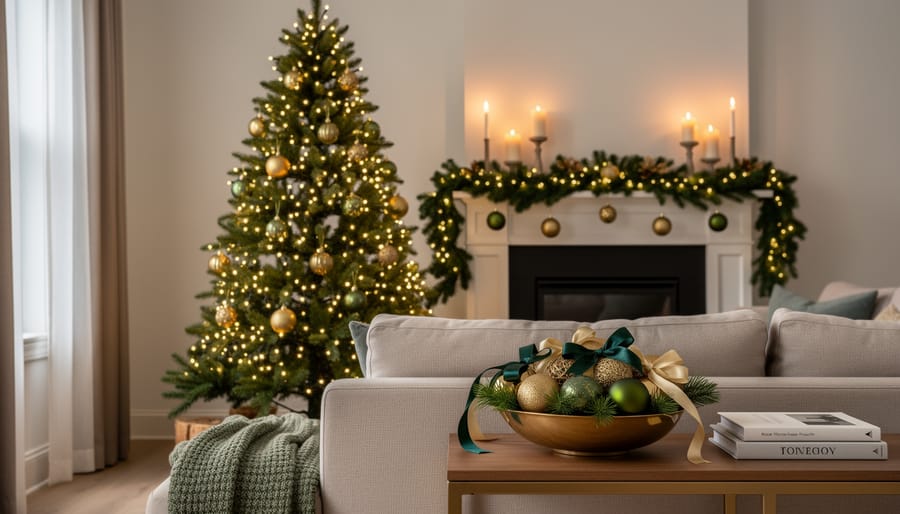
Start with the biggest piece, because everything else in the room will answer to it. Place your tree where it won’t block a doorway or radiator, ideally with an outlet nearby and enough breathing room to walk around it. If space is tight, a branch arrangement in a tall vase or a tabletop tree on a console does the same job with less footprint. A bare branch strung with tiny lights can feel surprisingly contemporary luxury when you keep the palette restrained.
Dress it in layers, lights first. Weave them from the trunk outward, not just around the surface, so the tree glows from within. Then add ribbon in loose swags or vertical cascades, and finish with ornaments.
Here’s the order that works for the whole room, with the tree as step two:
- Clear and declutter surfaces so you have room to style.
- Set up the tree or main focal point and fluff or shape the branches.
- Add lights, testing each strand before you hang it.
- Layer garlands and greenery around the tree and across the room.
- Style the mantel and shelves with groupings of different heights.
- Dress the dining table with a runner, a simple centrepiece and place settings.
- Add textiles such as throws, cushions and stockings for warmth.
- Finish with scent, candles or LED alternatives and small accents.
When it’s time for ornaments, group them in odd numbers, threes and fives, which looks natural rather than staged. Tuck larger baubles deeper in the branches for depth and keep the smaller ones near the tips. Mix your heirloom pieces with a few sleek, modern finishes, such as matte or mirrored glass, so the tree feels collected over time. Borrowing from traditional design ideas gives you a warm, timeless starting point to build on.
Dressing the Mantel, Entryway and Staircase
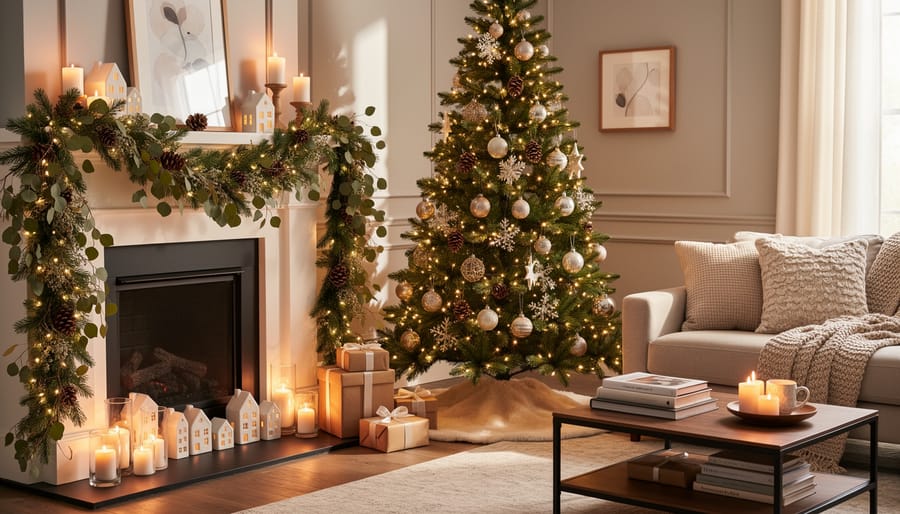
Think of the mantel as a stage and build it in layers. Start with the backdrop: lean a mirror or a framed print against the wall, since a mirror bounces light and doubles the glow of anything placed in front of it. Drape a garland across the top, letting it dip slightly at the centre and fall unevenly at each end for a relaxed look. Next, add height with candlesticks, small trees or branches in a vase, and finish with a few low ornaments or pinecones tucked into the greenery. Stockings come last, hung from sturdy holders rather than hooks that might sag, and spaced evenly so each has room to hang freely. If you use candles, choose flameless LED versions near the garland.
For the entryway, aim for a small welcome rather than a full display. A console table or bench topped with a lamp, a modest wreath or tray of ornaments, and a bowl of greenery says “come in” the moment the door opens. Keep walkways clear so guests can pass with coats and bags.
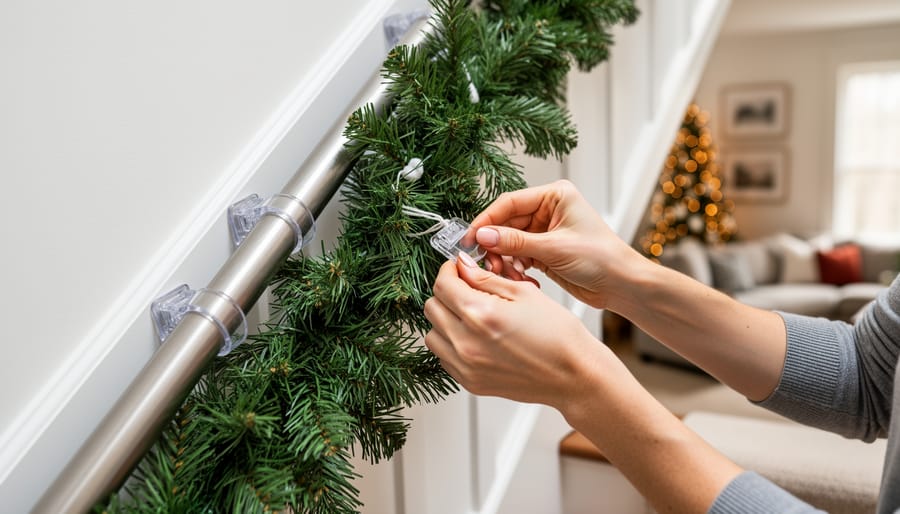
Banisters need a little more care. Use removable adhesive hooks on the wall side and soft floral wire or paper-coated twist ties on the railing itself, wrapping loosely so you never scratch paint or crush the grain of the wood. Space attachment points about every foot to prevent sagging, and test the hold before adding heavy ribbon or lights. Check the stairs afterward to make sure nothing hangs low enough to snag a sleeve or a foot.
Setting the Table and Softening Living Spaces
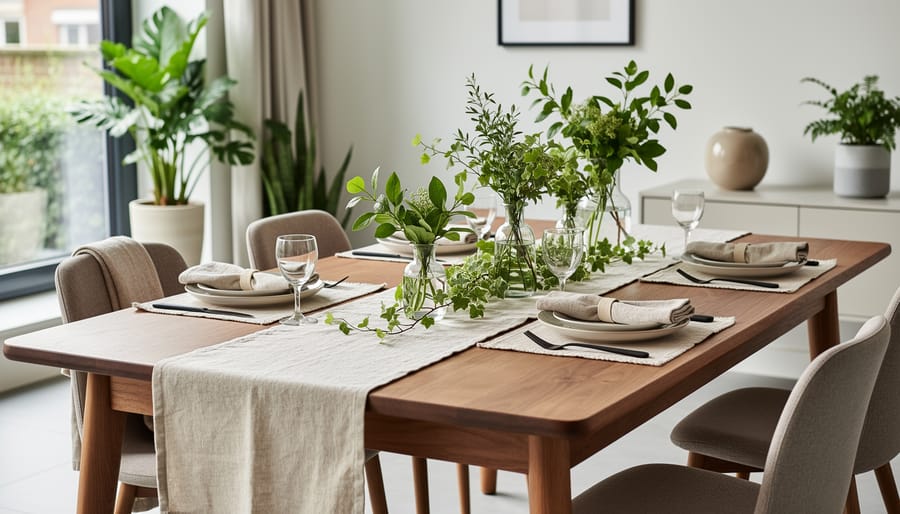
The dining table is where your festive look gets lived in, so keep it welcoming rather than precious. Start with a base layer: a plain linen or cotton runner, or even a length of hessian, gives you a calm backdrop that works with any palette. If you don’t own a runner, a neatly folded bedsheet or a strip of wrapping paper beneath glass does the job beautifully.
For centrepieces, think low and loose so everyone can see across the table. A tray of mixed greenery cuttings, a few pillar candles or LED alternatives, and a handful of pinecones or clementines looks effortlessly styled. Clementines stuck with cloves are a thrifty classic, and they add a gentle fragrance too. If your table is small, a single bowl of baubles or one glass jar of fairy lights is plenty. Odd numbers of items tend to look most natural, so group in threes or fives.
Place cards add a personal touch without costing much. Write names on kraft tags, tuck them into napkin folds with a sprig of rosemary, or use a small ornament as both name marker and keepsake. Mix your everyday plates with a few inherited or charity-shop finds for a collected, layered feel.
Then turn to the rest of the room. Soft furnishings do a lot of the work: drape a chunky knit or faux-fur throw over the sofa, swap cushion covers for velvet, tartan or textured neutrals, and lay a woolly rug where space allows. Hang a wreath on an interior door, such as a pantry, bedroom or study, using a removable over-the-door hook so the paint stays intact.
Finish with scent, used lightly. Simmer orange peel, cinnamon sticks and cloves on the hob, or choose one candle in a pine, spice or fig fragrance. Keep flames well clear of greenery and fabric, and let one gentle aroma lead rather than layering several.
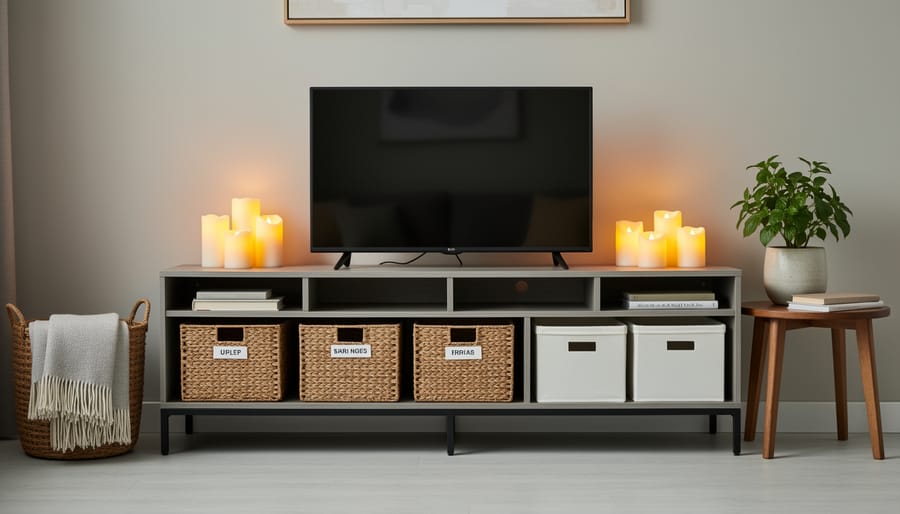
Ideas to Adapt: Traditional, Modern and Small-Space Christmas Looks
The steps above work whether your home leans cosy or clean-lined. What changes is the palette, the materials, and how much you let each layer breathe. Here are three snapshots to borrow from, or blend.
- Classic: Deep red, evergreen and gold, with velvet ribbon, real garland and candlelight; the standout accent is a mantel lined with heirloom stockings and glass baubles.
- Modern: Soft white, oatmeal and brushed brass, with matte ceramics, simple wreaths and warm white lights; the standout accent is one sculptural branch arrangement in a tall vase.
- Small Space: Forest green and cream, with removable hooks, tabletop greenery and battery lights; the standout accent is a mini tree on a shelf or console.
The real magic is in the mix. A traditional scheme feels fresher with one or two contemporary pieces, like a streamlined metallic tree topper or a sleek runner on the dining table. A modern scheme gains soul when you tuck in a few family ornaments, a hand-me-down nutcracker or a vintage wooden sleigh. Think of your heirlooms as the story and the newer finds as the polish.
If you’re renting or short on square footage, keep the order the same: focal point first, then layers, then small touches. Just scale each step down. A single garland over a doorway, a wreath hung on a command hook, and a few lit jars on a windowsill can read as every bit as festive as a fully dressed room.
Whichever direction you choose, give each room one clear moment rather than filling every surface. Restraint is what lets your favourite pieces shine.
Checking Your Work and Packing Up Smartly for Next Year
Once everything is up, do one slow walk-through with the room lights off and the tree lit. Stand in the doorway and look for uneven glow: a bare patch on the tree, a mantel that feels heavier than the opposite wall, or a garland that sags between hooks. Give the tree a gentle nudge to confirm it’s stable, then check that every cord runs along a baseboard or behind furniture, never across a walkway. Finally, squint at the whole room. If one colour or finish keeps jumping out, swap it for something from your chosen palette. Small tweaks here make the whole scheme feel intentional.
When the season ends, work in the reverse order you decorated: small accents first, the tree last. Wrap each ornament in tissue or a clean sock, group them in labelled bins by room, and coil light strings around a piece of cardboard so they don’t tangle. Tuck a note inside each bin about what’s in it and where it lives. Next December you’ll thank yourself, and when a gap shows up in your collection you can shop smart for exactly what’s missing rather than buying duplicates.
How early should I start decorating?
There’s no rule, so go by what feels joyful. Many people begin once the weather turns cold, and starting with the tree and lights gives you time to adjust before the big days.
How do I decorate without damaging walls?
Use removable hooks rated for the weight of your garland, and test one in a hidden spot first. Avoid nails and standard tape on painted or wallpapered surfaces.
How do I store ornaments safely?
Wrap fragile pieces individually, use dividers or egg-carton-style trays, and keep bins somewhere cool and dry. Place heavier boxes at the bottom of the stack.
Did your walk-through turn up any surprises? We’d love to see your finished rooms and hear your best packing-away tricks, so share a photo or tip with the community.
There’s no single right way to bring Christmas into your home, but the approach we’ve walked through holds up in any space. Start with a simple palette, build from the biggest statement down to the smallest accent, and treat safety as part of the design rather than an afterthought. Do it room by room, and the whole house comes together without the last-minute scramble.
The real magic is in the balance. A few heirloom ornaments beside a clean, modern garland, a candlelit mantel next to softly glowing LEDs, a classic wreath on a pared-back door. Traditional warmth gives a home its heart, and modern polish keeps it feeling fresh and considered. You don’t have to choose one over the other.
Before you pack away the boxes in January, take a moment to enjoy what you’ve made. Then we’d love to see it. Share a photo of your favourite corner, tell us the festive touch you’d never skip, or pass along a tip that saved you time. Every home adds something new to the conversation, and we’re looking forward to seeing yours.